The Clinical Hook
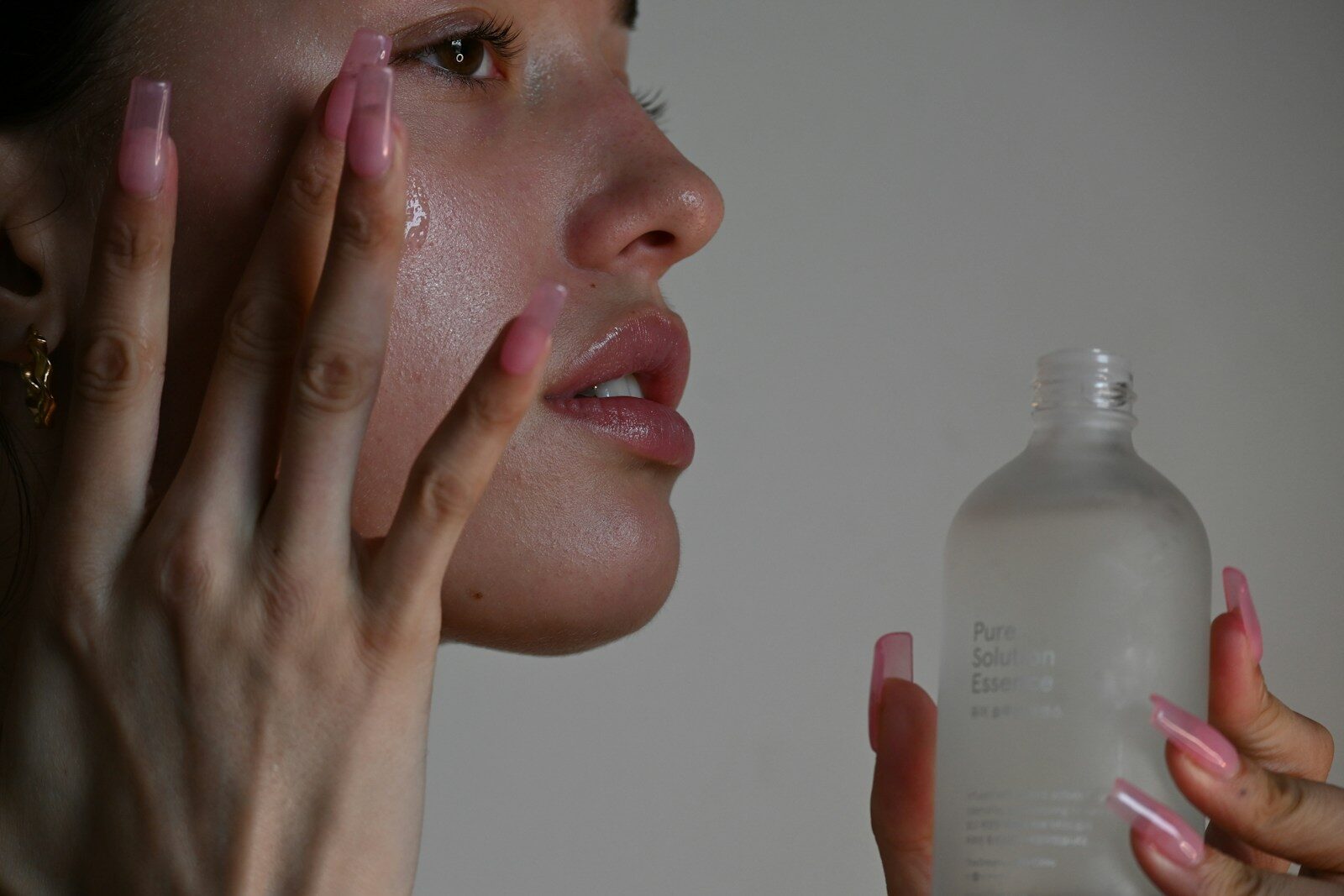
You apply moisturiser. Your skin feels comfortable — supple, calm, done. Twenty minutes later, the tightness is back, as if the cream evaporated and took something with it. So you apply more. An hour later, the same dryness returns, and a quiet suspicion forms: is my moisturiser even doing anything?
It probably is. The problem is transepidermal water loss — something happening at the same time, continuously, whether you moisturise or not: water leaving your skin. Not sweating, not visible — a slow, passive diffusion of water vapour from the water-rich layers beneath, straight through the surface, into the air. Once you understand it, the “dry right after moisturising” paradox stops being a paradox. Your cream is adding water to the surface while the leak underneath keeps draining it away. This article maps the leak, the four ingredients that address it cosmetically, and the layering logic that actually holds water where you put it.
Clinical TL;DR
- Transepidermal water loss (TEWL) is the passive, constant diffusion of water vapour through the stratum corneum, driven by the humidity gradient between skin and air. It is normal — and it is the reason skin can feel dry minutes after moisturising.
- Healthy barrier, low leak: on intact forearm skin, TEWL typically measures in single-digit grams per square metre per hour. A compromised barrier leaks measurably faster — and feels it.
- Moisturiser “not working” usually means one of three things: a humectant with no occlusive cap (water added, then lost), a barrier whose lipid mortar is depleted, or an environment (dry air, hot water, harsh cleansing) widening the gradient.
- Four ingredients earn their place against TEWL on mechanism: ceramide NP (the structural workhorse of the lipid mortar), cholesterol (membrane plasticity), free fatty acids (the linoleic-acid connection), and panthenol (humectancy plus barrier support).
- The fix is architectural, not a heavier cream: humectant to hold water, emollient to fill the gaps, occlusive to cap the surface — in that order.
What Transepidermal Water Loss Actually Is
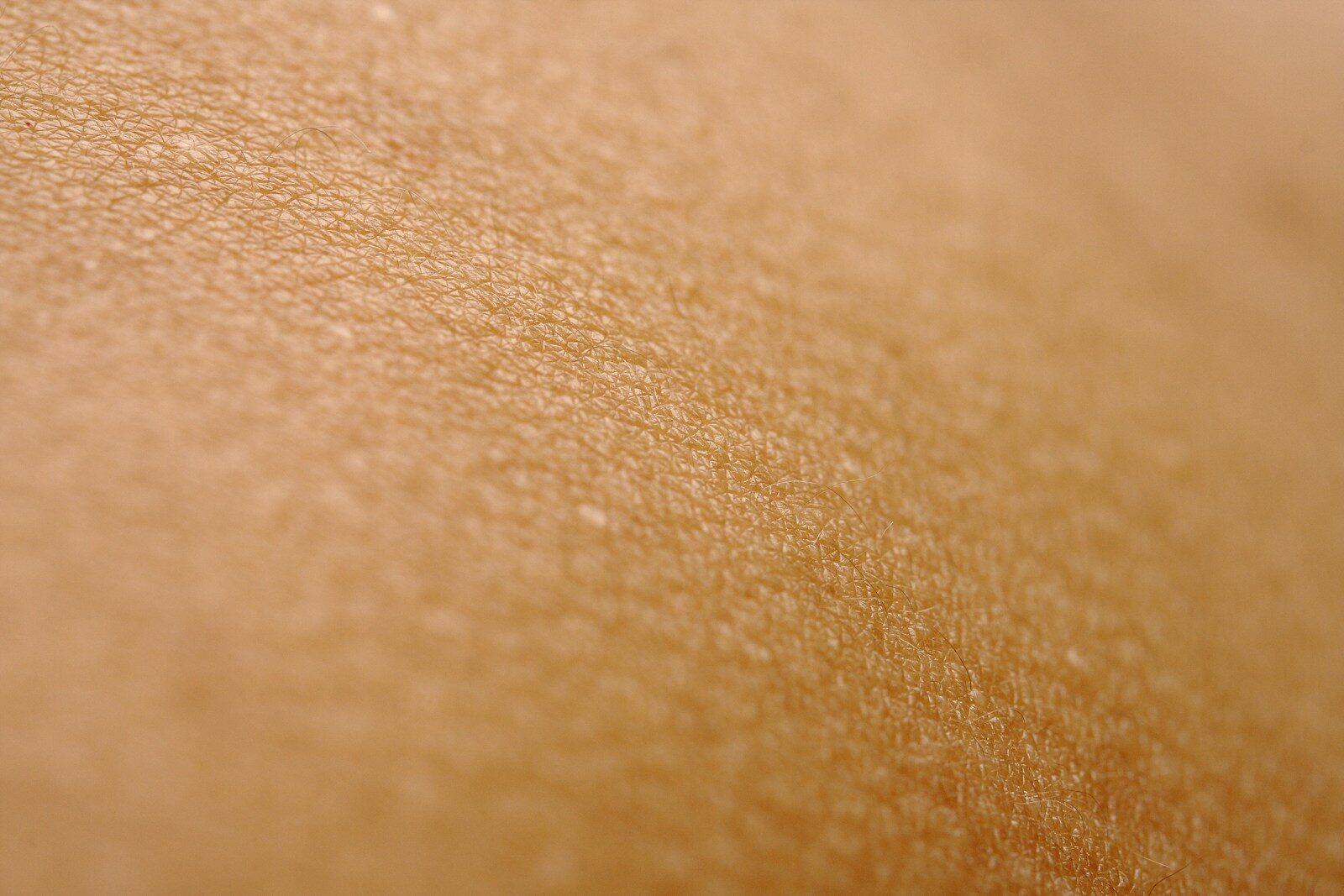
Strip away the jargon and transepidermal water loss is physics. Your dermis is roughly 70% water; the air in a heated winter room may sit at 20–30% relative humidity. Water moves down its concentration gradient, always, and the only thing standing between that reservoir and the dry air is about 10–20 micrometres of stratum corneum — the “bricks and mortar” you have met in this blog’s earlier posts. The bricks are flattened, protein-hardened corneocytes. The mortar is the intercellular lipid matrix. TEWL is the rate at which water vapour passes through that wall.
Instrumentation measures it in grams per square metre per hour. On healthy forearm skin, expect single digits. On the face — thinner stratum corneum, more appendages — baseline TEWL runs higher, which is one reason facial dryness announces itself first. And when the mortar is depleted, the number climbs: the wall is the same thickness, but it has become permeable. That single number is the most honest summary of barrier function available — more honest, in many ways, than how skin looks, because a barrier can be leaking well before it looks damaged.
Two clarifications worth making, because the term gets misused. First, TEWL is not sweating and not dehydration in the medical sense; it is passive diffusion, happening in everyone, right now, including you as you read this. Second, the cosmetic goal is never zero TEWL — a living barrier breathes. The goal is a normal rate: low enough that the skin’s own water-binding machinery can keep up.
Why Skin Feels Dry Right After Moisturising
With the mechanism in place, the paradox resolves into three distinct failure modes. Most “my moisturiser stopped working” complaints are one of these wearing a disguise.
Failure mode one: the humectant with no cap. Many lightweight moisturisers are built around humectants — glycerin, hyaluronic acid, panthenol — molecules that bind water. On the skin they do exactly that: they pull water into the upper stratum corneum and the skin feels hydrated. But humectants do not seal. In dry air, that newly bound surface water simply joins the TEWL stream and evaporates, sometimes faster than before, because the humectant film has increased the water content at the very surface — the top of the gradient. The sensation is unmistakable: comfort for fifteen minutes, then tightness worse than baseline. The moisturiser did not fail to hydrate; it hydrated without retaining.
Failure mode two: the depleted mortar. If the intercellular lipid matrix is low on ceramides, cholesterol, or free fatty acids — after aggressive exfoliation, retinoid overuse, harsh surfactants, or simply seasonal decline — then every humectant you apply sits on a leaky foundation. Water is added at the surface and lost through the wall. This is the failure mode where “drinking more water” and “a richer cream” both disappoint, because neither rebuilds the mortar. Only lipid replenishment addresses it, which is why the ingredient section below leads with the barrier lipids rather than with moisturisers.
Failure mode three: the widened gradient. Hot water, low indoor humidity, over-cleansing, and astringent toners all steepen the gradient or strip the wall. Long hot showers are the classic: heat increases the vapour-pressure driving force while surfactants remove surface lipids, so TEWL spikes in the minutes after towelling off — precisely when most people apply their cream to already-accelerated loss. Lukewarm water, brief contact, and moisturiser applied to slightly damp skin are not folk wisdom; they are gradient management.
The Mortar: Ceramide NP, Cholesterol and Free Fatty Acids
The stratum corneum’s lipid matrix is, by weight, roughly half ceramides, a quarter cholesterol, and 10–15% free fatty acids, organised into stacked lamellar sheets between the corneocytes. That architecture — not any single lipid — is what makes the wall selectively permeable. Evaluate each component against TEWL, and a clear division of labour emerges.
Ceramide NP — ceramide with a non-hydroxy fatty acid bound to a phytosphingosine base — is the most abundant ceramide class in human stratum corneum and the structural workhorse of the lamellae. Its long, straight acyl chains pack tightly, and that tight packing is the physical basis of low permeability: water vapour diffuses slowly through highly ordered lipid sheets and quickly through disordered ones. Cosmetically, ceramide NP does not “rebuild the barrier” in any literal sense — no topical ingredient reconstructs lamellar sheets overnight — but it supplies the exact lipid class the mortar is made of, supporting the appearance of a well-ordered, less leaky surface. When formulators talk about “barrier repair,” ceramide NP is usually the molecule they mean first.
Cholesterol is the plasticiser. Pure ceramide sheets would be brittle — beautifully ordered and prone to cracking under movement. Cholesterol inserts between the ceramide chains and keeps the lamellae fluid enough to flex with facial expression and joint movement without fracturing. A barrier can be ceramide-rich and still leak if it cannot move; cholesterol is what makes the wall a living membrane rather than a ceramic tile. In cosmetic language: it supports the suppleness of the barrier, the quality you feel as skin that moves without tightness.
Free fatty acids — with emphasis on linoleic acid — are the third leg, and the most underappreciated. They fine-tune the lamellar packing and carry a particular cosmetic relevance: linoleic-poor lipid environments correlate with the appearance of congestion and roughness, a connection explored in this blog’s companion post on barrier-compatible emolliency. For TEWL specifically, the fatty-acid fraction keeps the lipid mixture in its functional phase — too little, and the mortar’s organisation degrades even when ceramides are present. The cosmetic takeaway is ratio-awareness: barrier support is a three-lipid job, and single-lipid products address one leg of a three-legged stool.
Panthenol: The Humectant That Respects the Wall
Panthenol (provitamin B5) earns its place as the fourth ingredient because it is the rare humectant that also supports barrier function. Like glycerin it binds water in the stratum corneum, improving the feel of hydration; unlike some humectants, it has a documented association with improved barrier appearance — skin looks and feels less rough, and TEWL readings trend downward with consistent use. It converts in skin to pantothenic acid, a coenzyme-A constituent involved in lipid synthesis, which gives its barrier reputation a plausible mechanistic root rather than a marketing one.
The claim boundary stays where it belongs: panthenol is a cosmetic humectant with barrier-supporting properties, not a barrier drug. Its value in a TEWL protocol is positional — it is the water-holder in the sandwich described below, the ingredient that gives the occlusive cap something worth capping.
The Cap: Sealing the Surface Against the Gradient
If the mortar lipids rebuild the wall and panthenol holds the water, the third architectural element is the occlusive cap: a substantive lipid film that sits on the surface and physically slows vapour escape. This is where ingredient choice becomes tactile — occlusives range from the heavy (petrolatum, the clinical benchmark for TEWL reduction) to the elegant (plant lipids that seal while feeling like skincare rather than ointment).
Meadowfoam seed oil belongs in the elegant category, and it is worth noting exactly why: its fatty-acid profile is over 95% long-chain (eicosenoic and docosadienoic acids), and those long chains form what its technical literature describes as a non-comedogenic, biomimetic seal over the stratum corneum that mitigates transepidermal water loss — while remaining oxidatively stable enough not to turn rancid on the shelf or the skin. That combination (substantive seal + stability + non-comedogenic feel) is the practical answer to failure mode one: a humectant layer capped with meadowfoam holds its water instead of donating it to the dry air. For the formulator-minded, it also extends the shelf life of less stable carrier oils in a blend — a quiet second job behind the cosmetic one.
The honest placement: an occlusive does not fix a depleted mortar — it manages the symptom (the leak) while the ceramide–cholesterol–fatty-acid work addresses the structure. Both layers are the protocol; neither alone is.
Prosumer Application: The Barrier-First Sandwich Protocol
Here is the layering logic, in order, for skin that dries out after moisturising. Each step has one job.
Step 1 — Cleanse without widening the gradient. Lukewarm water, brief contact, a non-stripping cleanser. Pat — don’t rub — and leave the skin slightly damp. You are about to trap that dampness deliberately.
Step 2 — Humectant on damp skin. A panthenol-containing hydrating layer (serum or lotion) applied to slightly damp skin binds the surface water you just preserved. This is the water you intend to keep.
Step 3 — Emollient to fill the gaps. The lipid step: a ceramide NP / cholesterol / free-fatty-acid product, or a well-chosen plant lipid, worked over the humectant layer. Think of it as repointing the mortar while the wall is wet.
Step 4 — Occlusive cap, thin and deliberate. A small amount of a sealing lipid — meadowfoam seed oil is the precise tool here — pressed over the driest zones (cheeks, jawline, around the mouth). Thin beats thick: you are laying a vapour barrier, not frosting a cake.
The cadence rule: run this protocol for two to three weeks before judging it. Barrier lipids integrate slowly; TEWL does not normalise overnight. Judge at week three, not day three.
Skin001’s ZSerum™ system is formulated around exactly this sandwich logic — humectancy, lipid replenishment, and a sealing finish composed as one routine rather than three hopeful purchases. As with every system named in this blog, the mechanism above is the education; the system is the applied example.
One interaction worth flagging, because it connects this post to the launch’s running theme: an impaired barrier amplifies every other pathway — including the barrier feedback loop in hormonal acne, where a leaking wall makes an inflamed pathway more reactive. Fix the leak and the whole system calms down. That is the quiet centrality of TEWL: it is rarely the headline concern, and it is very often the reason the headline concern will not resolve.
FAQ
How is TEWL measured? With evaporimetry probes placed on the skin surface, in grams of water per square metre per hour. It is a lab and clinic measurement — useful for formulators and dermatologists tracking whether a protocol is working, not something to measure at home. At home, judge by the symptom: comfort that lasts hours, not minutes.
Can drinking more water reduce TEWL? Not meaningfully. TEWL is a surface-permeability phenomenon, and systemic hydration does not change the stratum corneum’s leak rate in any measurable way for healthy individuals. The wall, not the reservoir, is the variable.
Is a higher TEWL always bad? No — TEWL is normal and necessary; skin is a living, breathing interface, not shrink-wrap. Elevated TEWL relative to your own baseline is the signal that the barrier needs support. Context matters more than any absolute number.
Do I need all four ingredients, or is one enough? The mortar is a three-lipid structure plus water management — single-ingredient products address one element. A ceramide-only product on a cholesterol-poor barrier is the three-legged stool with one leg. Layered or combined formulas that respect the full architecture outperform heroic single ingredients.
Will an occlusive like meadowfoam seed oil clog my pores? “Non-comedogenic” is the relevant claim category, and meadowfoam’s technical literature positions it there — but comedogenicity is individual. Patch-test any new occlusive along the jawline for a week before full-face use, especially on congestion-prone skin.
The CTA
If your skin dries out within the hour after moisturising, stop shopping for a heavier cream and start thinking like a barrier architect: hold the water, rebuild the mortar, cap the surface — in that order, for three weeks. Transepidermal water loss never stops — but with the wall rebuilt and the surface capped, it stops being the reason your skin feels dry. Explore Skin001’s pure compound ingredients and barrier-support lipids in the catalogue, and build the routine around the wall rather than against it.