The Clinical Hook
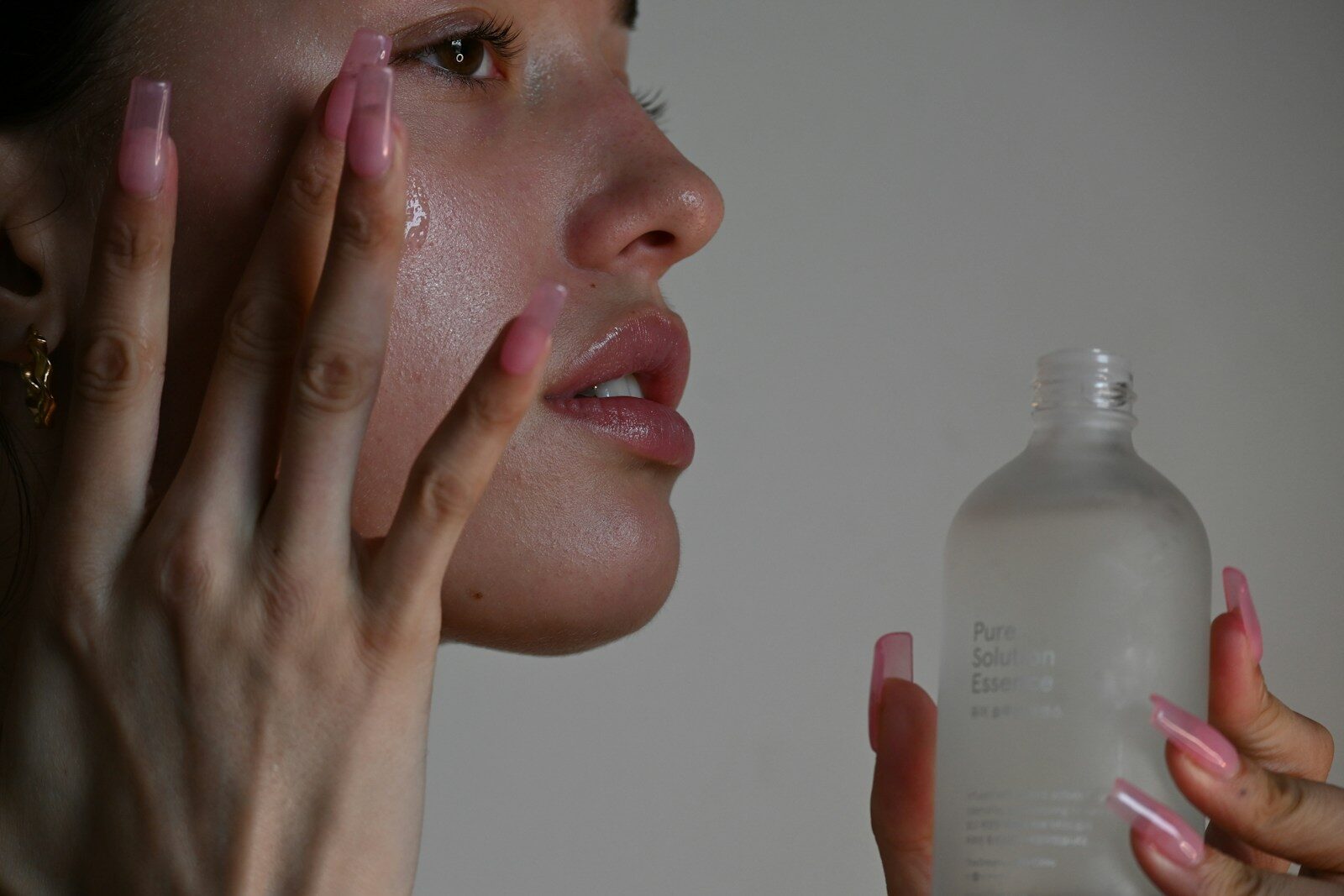
Glass skin arrived as a photograph before it arrived as a routine: a face so smooth, so evenly lit, that light seemed to sit on it rather than sink into it. The internet answered the photograph with arithmetic — ten steps, twelve steps, a shelf of bottles — as if luminosity were a reward for endurance. It is not. A glass skin serum earns its look through three physical properties, and only three: how light leaves the surface, how much water the surface holds, and how visible the pores read against it. Get those three right and the step count becomes irrelevant. Get them wrong and no number of layers will rescue the result.
This article is a map of those three properties, in the order they matter. It is also a simplification with a purpose: a routine you will actually repeat beats a ritual you abandon, and skin rewards repetition more reliably than it rewards novelty.
Clinical TL;DR
- Glass skin is an optical effect, not a skin type. A smooth, well-hydrated surface reflects light coherently; a rough, dry surface scatters it. The difference you see in the mirror is largely the difference between specular reflection and diffuse scatter.
- Three levers produce the look: refraction (a smooth, even surface that returns light cleanly), hydration (a plumped stratum corneum whose micro-relief is softened), and pore appearance (pores read smaller when the surface around them is smooth and evenly lit — their anatomical size does not change).
- No cosmetic product opens or closes a pore, shrinks it, or changes its size. Any claim to the contrary is a category error, and this article makes no such claim.
- A glass skin serum works best as one well-chosen layer in a short routine — humectant, barrier support, and a light, even finish — not as one bottle among ten competing ones.
- Cosmetic language applies throughout: the goal is the appearance of luminous, even, smooth-looking skin, not a medical outcome.
Lever One: Refraction — Why Smooth Skin Looks Lit From Within
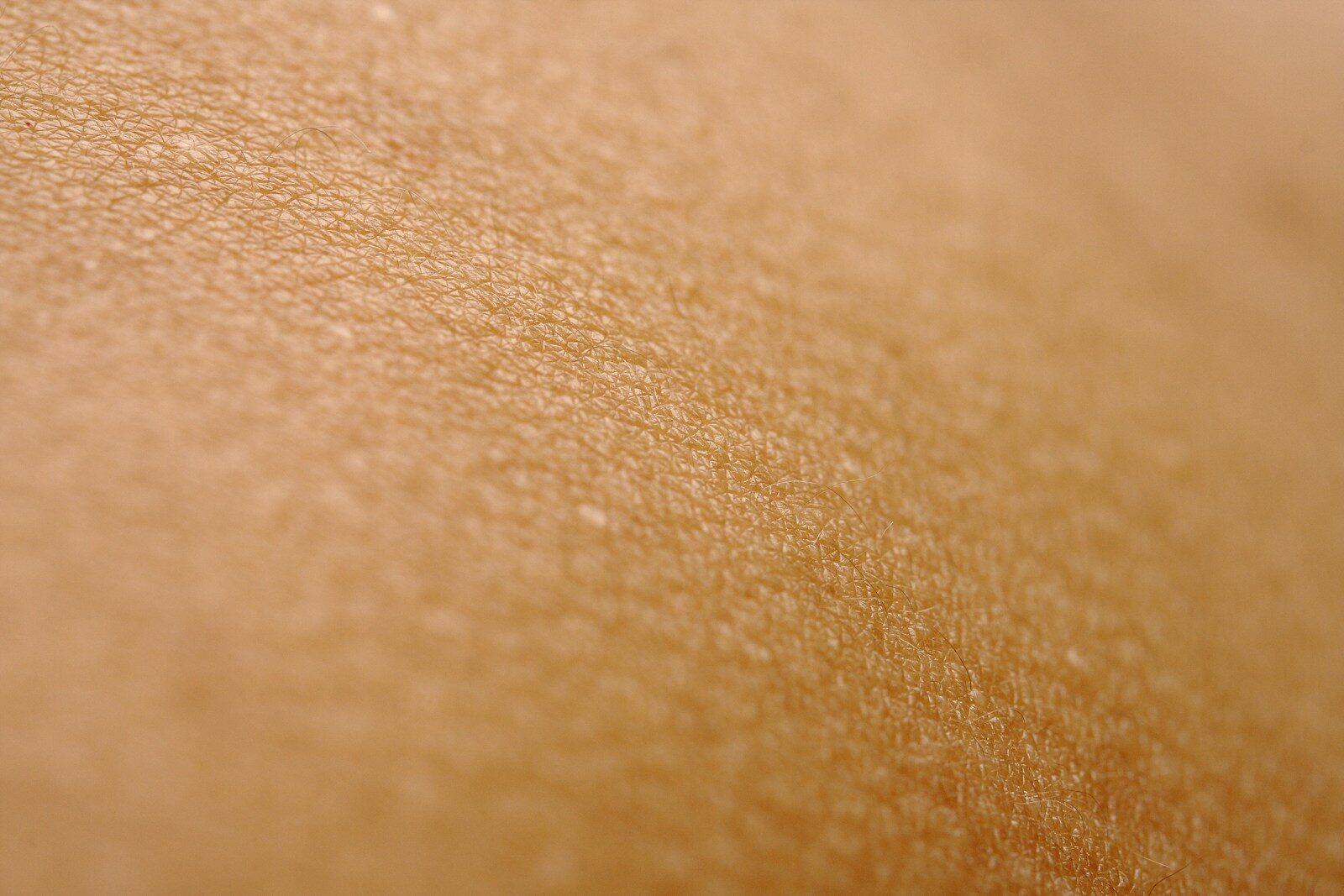
Stand in front of a mirror and the physics is doing the talking. Light striking a smooth surface bounces back in an orderly direction, and the eye reads that order as shine, clarity, and depth — the quality photographers call specular reflection. Light striking a rough surface — dry flakes, uneven texture, a disrupted barrier — scatters in every direction, and the eye reads that scatter as dullness, even when the skin underneath is perfectly healthy.
That is the whole secret of the glass-skin photograph, and it explains two common disappointments. First, why a face can be well moisturised and still look flat: if the surface is uneven, the light never gets a clean return, however much water sits underneath. Second, why oil alone does not create the look: a greasy film reflects light, but it reflects it unevenly, pooling in some places and breaking in others, and the eye reads that as shine without clarity. Glass is not grease. Glass is a smooth, continuous surface returning light in one direction.
The cosmetic objective at this lever is therefore surface order: a routine that leaves the outermost layer even, supple, and free of the roughness that scatters light. Gentle, consistent care does this better than aggressive resurfacing, because the surface that reflects best is the surface that is not being constantly disrupted. Exfoliation has a role — a smooth surface is partly a well-renewed one — but the role is maintenance, not assault. A barrier that is repeatedly stripped will scatter light worse than the texture it was meant to fix, which is why the companion post on the barrier-lipid alphabet matters here: the lipids that organise the barrier are also, indirectly, the lipids that keep its surface optically calm.
Lever Two: Hydration — Water as a Surface Treatment
If refraction is about the surface, hydration is about what sits just beneath it. The stratum corneum, the outermost layer of skin, behaves like a sponge whose optical properties change with its water content. When it is well hydrated, its fine lines and micro-relief soften and plump, the surface evens out, and light returns more coherently — refraction improves as a direct consequence. When it is dehydrated, the relief sharpens, the surface roughens at a microscopic scale, and light scatters. Hydration is not a separate glow added on top of the skin; it is one of the mechanisms by which the skin becomes reflective in the first place.
This is where the water-loss story connects. The companion post on transepidermal water loss describes the leak that makes skin feel dry minutes after moisturising: water escapes faster than the routine replaces it, and the surface deflates back to its rough state. A glass-skin routine that ignores water loss is a routine that photographs well for an hour and disappoints by evening. The practical rule is the sandwich the barrier literature has always implied: humectant to draw water in, barrier support to slow its escape, and a light emollient finish to even the surface. Each layer has a distinct job, and substituting one for another — humectant alone, oil alone — leaves a gap the eye will find.
Humectants earn their place here on mechanism, not marketing. Glycerin, panthenol, and hyaluronic-acid-type materials attract and hold water at the surface, and their visible effect is plumpness and softened relief — the appearance of a surface that has been filled in rather than coated. The caution is equally mechanistic: a humectant in very dry air, with no barrier layer above it, can lose its water to the environment instead of holding it in the skin. The sequence matters as much as the ingredient. Damp skin, humectant, barrier, finish — in that order, and the finish should be light enough not to break the optical continuity the first two layers built.
Lever Three: Pore Appearance — Shadow, Not Size
Pores are the third lever and the most misunderstood. A pore is an opening, fixed in size by anatomy, and no serum, mask, or device available over the counter changes that size. What changes — dramatically — is how visible the pore reads, and visibility is a function of three things: the smoothness of the skin around it, the shadow inside it, and the contrast between the two.
A pore surrounded by rough, dry, uneven skin casts a harder shadow and reads larger. The same pore surrounded by smooth, hydrated, evenly lit skin casts a softer shadow and recedes. Sebum and congestion inside the pore darken the shadow and increase contrast, which is why the appearance of congestion and the appearance of pore size travel together even though they are different things. The cosmetic objective is therefore indirect and honest: smooth the surroundings, keep the surface hydrated so light returns evenly, and support the appearance of clear pores — and the pores will read smaller without any of them having changed size at all.
This distinction protects both the reader and the brand. A product promising smaller pores is promising an anatomical change it cannot deliver. A routine promising smoother-looking skin with less visible pores is promising an optical change it can. The second promise is the one worth making, and it is the promise this article keeps.
The Short Routine: Four Steps, Each With a Job
The ten-step routine fails not because its ingredients are wrong but because its architecture is un-auditable: when ten layers compete, no one can tell which one helped, which one clashed, and which one the skin objected to. The glass-skin routine below has four steps, and each step answers to exactly one lever.
Step one: clean gently. The goal is a surface free of the day’s residue without stripping the barrier that will do the optical work. A cleanser that leaves skin tight has already cost you refraction.
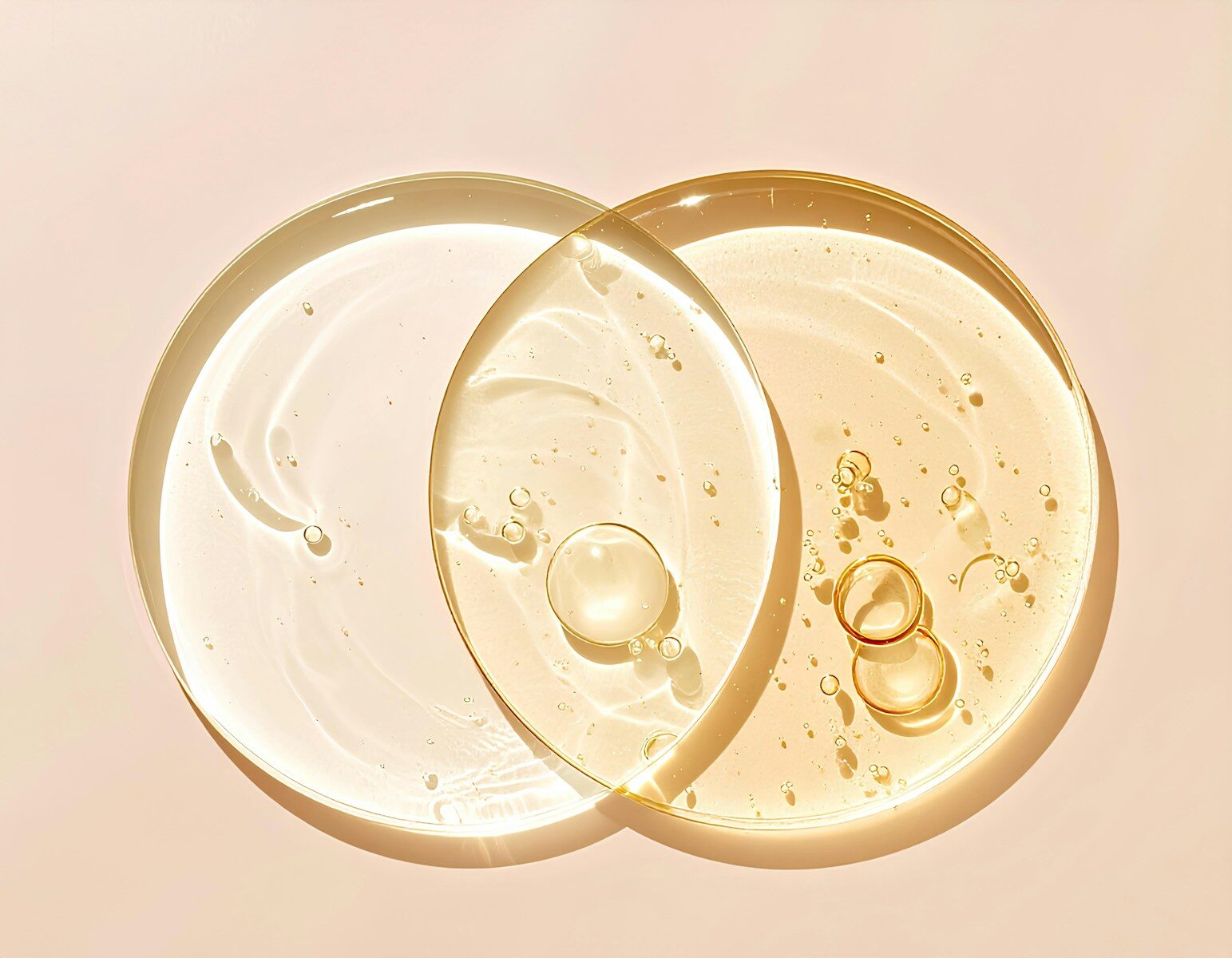
Step two: hydrate on damp skin. A humectant layer — a glass skin serum used as the hydrating step — applied while the surface is still slightly damp, so the water it holds has somewhere to come from. This is the hydration lever, doing its work at the surface.
Step three: support the barrier. A ceramide- and lipid-aware layer, or a barrier-supporting moisturiser, that slows water loss and keeps the surface organised. This is the step the companion post on barrier-compatible emolliency frames as emollient selection: the right finish for the skin in front of you, not the heaviest one on the shelf.
Step four: finish light and even. A thin, even final layer — not a thick occlusive coat — that unifies the surface so light returns cleanly. In daylight this step may be sunscreen; in the evening, a light emollient. The test is optical, not tactile: does the surface look continuous, or does it look filmed?
Introduce one new product at a time, give each at least two weeks before judging it, and patch-test on the jawline or inner forearm first. A routine that is short is a routine whose failures can be diagnosed — and a routine that can be diagnosed is a routine that can be fixed.
Prosumer Application: Building the Look With Finished Compounds
For the reader working with finished or semi-ready compounds at home, the rules are the same as for any barrier-first routine, applied to an optical goal. Work with finished products and follow their label directions; do not improvise raw-percentage recipes, and do not stack three serums that all claim the same job in the hope of tripling the effect — you will most likely triple the emulsifiers and fragrances while learning nothing about which product helped.
Within Skin001’s formulation framework, this is the role of PearlGlaze™: a glass-skin serum system presented as the applied example of the architecture above, where a hydrating serum layer, barrier-aware support, and a light, even finish are designed as one optical system rather than three competing claims. As with every soft-embed in this blog, that is positioning and design intent, not a claim about measured outcomes. The guardrail that governs all home boosting applies here with full force: no factory-level formulation teaching, no invented concentrations, and no medical claims — work with finished compounds, introduce one at a time, and let the surface do its slow, optical work.
Two common errors deserve naming. The first is chasing shine with oil: a heavy oil layer reflects light, but unevenly, and the result reads as grease rather than glass. The second is chasing smoothness with aggression: over-exfoliation strips the very surface that was supposed to reflect, and the barrier disruption that follows scatters light worse than the texture it replaced. Glass skin rewards restraint in both directions — enough hydration to plump, enough barrier support to hold it, and a finish light enough to let the light through.
FAQ
Is glass skin the same as oily skin? No. Oily skin reflects light unevenly, pooling where sebum collects; glass skin reflects it evenly, from a smooth, hydrated surface. The difference is visible at a glance: shine without clarity is oil, shine with clarity is the glass effect.
Can a serum actually make my pores smaller? No cosmetic product changes pore size. What a good routine changes is pore appearance: smoother, hydrated surroundings cast softer shadows, so pores read smaller. That optical change is real and achievable; the anatomical change is not claimed by any honest product.
Do I need ten steps to get this look? No — and ten steps make the result harder to diagnose, not better. Four steps with distinct jobs (clean, hydrate, barrier, finish) cover all three levers, and a routine you repeat daily beats a ritual you abandon weekly.
Why does my skin look glassy in the morning and dull by evening? Usually water loss. The morning surface is hydrated and smooth; by evening, water has escaped faster than the routine replaced it, the surface roughens, and light scatters. The fix is barrier support above the humectant, not another hydrating layer underneath it.
Can I use a glass skin serum with vitamin C or retinol? In principle, yes — hydration layers pair well with actives that can temporarily stress the barrier. Introduce only one new active at a time, apply the active first on clean skin, follow with the hydrating and barrier layers, and stop if irritation appears so you can tell what caused it.
The CTA
Glass skin was never a shelf. It was always a surface: smooth enough to return light cleanly, hydrated enough to hold that smoothness, and even enough that pores recede into shadow rather than demanding attention. Build for those three properties, in that order, and the step count takes care of itself. Explore Skin001’s pure compound ingredients and bases, and judge each one the way this article judges them: not by how many steps it adds to your routine, but by whether it makes light behave better on your skin.