The Clinical Hook
Every serum shelf carries the same promise in the same two words — hyaluronic acid — and almost none of them tells you the one fact that decides what the product does. Hyaluronic acid molecular weight is that fact: the size of the molecule determines where it sits on and in the skin, how much water it can hold there, and whether the result looks like surface smoothing, deeper comfort, or both. A large hyaluronic acid molecule cannot travel far into the skin, so it forms a hydrating film on the surface. A small one travels further, but carries less water with it and can feel less comfortable on reactive skin.
Clinical TL;DR
- Hyaluronic acid molecular weight decides where the molecule sits: high-weight molecules stay on the surface, low-weight molecules penetrate further into the outer layers, and medium-weight molecules sit between the two.
- High molecular weight hyaluronic acid gives surface hydration and the appearance of smoother, more light-reflective skin. Low molecular weight hyaluronic acid gives a deeper feeling of comfort and hydration, with a higher chance of reactivity on sensitised skin.
- Sodium hyaluronate is the salt form of hyaluronic acid, smaller and more stable in formula; hydrolysed hyaluronic acid is broken into even smaller fragments. Neither name, alone, tells you the weight distribution inside the bottle.
- A multi-weight hyaluronic acid serum — one that blends several sizes — is usually the most defensible choice, because it covers surface and deeper hydration in a single step.
- Dehydrated skin and dry skin are not the same problem: dehydration is a water problem a humectant can help with, while dryness is a lipid problem that needs barrier support alongside it.
- Judge a hyaluronic acid product on how skin looks and feels over two to four weeks, not on the first hour’s surface effect.
One Name, Three Size Classes
Hyaluronic acid is a glycosaminoglycan, a long sugar-chain molecule that occurs naturally in skin, where it binds water in the spaces between cells. In cosmetic ingredients it is used in a wide range of sizes, measured in kilodaltons (kDa) or megadaltons (MDa). The cosmetic literature groups them, broadly, into three classes, and the boundaries between them are approximate — different suppliers draw them differently — but the behaviour pattern is consistent.
High molecular weight hyaluronic acid, roughly above 1,000 kDa, is a large molecule. Applied to skin, it is too large to pass far beyond the surface, so it stays in the outermost layers and forms a thin, water-binding film. That film is the source of the immediate effects people notice: skin looks smoother, feels softer, and reflects light more evenly. It is also why high-weight formulas are the safest starting point for reactive skin — the molecule largely stays where it can be washed off.
Medium molecular weight hyaluronic acid, roughly in the hundreds of kilodaltons, penetrates further into the outer layers than its high-weight counterpart while still carrying a useful amount of water. It is the compromise class: less instant surface smoothing than a high-weight film, more depth of hydration feeling than a surface film alone.
Low molecular weight hyaluronic acid, roughly below 100 kDa and down into oligo-hyaluronic acid fragments, travels furthest into the outer skin layers. Because the fragments are small, each one holds less water than a large molecule, but their reach gives a different kind of result: a feeling of hydration that comes from within the outer layers rather than from a film on top. The trade-off is reactivity. Smaller fragments interact more with the skin’s surface biology, and on sensitised or barrier-compromised skin they are the class most often associated with tingling, tightness or a feeling of irritation — a reason to patch-test a low-weight product before committing to it, not a reason to fear the class outright.
The Skin Concern It Addresses: Dehydration, Not Dryness
This is the distinction the whole article turns on, and the one most product copy collapses. Dehydrated skin lacks water: it can feel tight after cleansing, look dull, and show fine surface lines that soften when hydration returns. It can occur in oily skin as readily as in dry skin, because oil and water are separate systems. Dry skin lacks lipids: the barrier seal itself is thin, water escapes faster, and the surface feels rough or flaky even when a humectant has just been applied. A humectant answers the first problem. It cannot, alone, answer the second — and applying a humectant to lipid-depleted skin without sealing it can leave the skin feeling drier an hour later, because the water it attracted has somewhere to escape to. The companion post on transepidermal water loss explains that escape route in full: water loss through the barrier is the number that decides whether hydration stays or leaves.
What Each Weight Actually Does on Skin
Judged honestly, the three classes give three different appearance results, and a good buying decision starts by matching the result to the skin in front of you.
A high-weight serum is a surface product, and should be judged as one. Expect skin that looks smoother and more even within the hour, a softer surface feel, and a modest improvement in the appearance of fine dehydration lines — the shallow surface creasing that comes and goes with water content, not the deeper lines of ageing. Do not expect it to change how skin feels the next morning on its own; a surface film is, by design, temporary.
A medium-weight serum is the everyday workhorse. Its appearance result is less dramatic in the first hour and more consistent across the day: skin that looks hydrated rather than filmed, a comfortable rather than coated feeling, and a better base for the rest of the routine. For most readers buying a first hyaluronic acid serum, this class — or a blend built around it — is the sensible default.
A low-weight serum is the specialist. Its appearance result, when it suits the skin, is the most interesting of the three: hydration that seems to come from within the surface layers, a plumper look that persists beyond the first hour, and a smoother feel that survives cleansing better than a film does. When it does not suit the skin, the signal is equally clear: tingling, tightness, or a reactive feeling that a high-weight product never caused. That signal is information, not failure — it tells you that your skin, at this moment, wants the larger molecule.
None of the three classes fills wrinkles, rebuilds tissue, or changes skin structure. Those are medical or structural claims, and no topical cosmetic earns them. What all three can honestly be judged on is the appearance of hydration, smoothness and comfort over weeks of use.
Why “Hyaluronic Acid” on a Label Tells You Almost Nothing
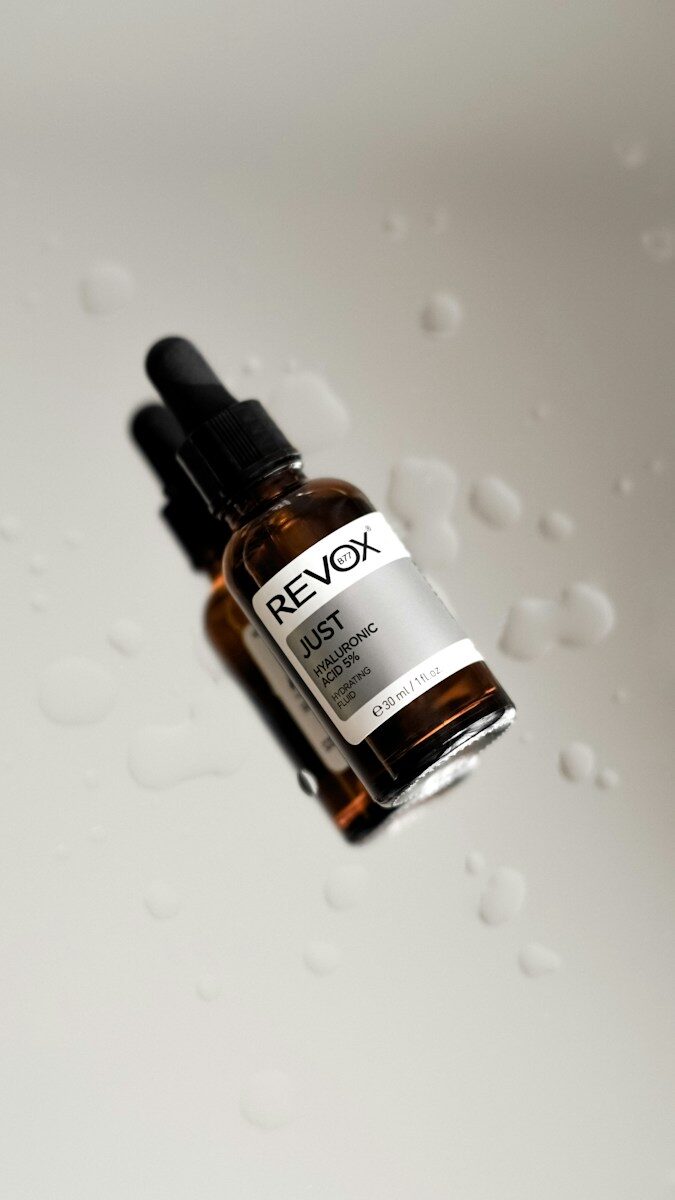
Open an ingredient list and the problem becomes visible. “Hyaluronic acid” may appear as hyaluronic acid itself, as sodium hyaluronate — its sodium salt, smaller and more stable in water-based formulas, and the form most serums actually contain — or as hydrolysed hyaluronic acid, fragments produced by breaking the chain down. Sodium acetylated hyaluronate is a modified form designed to cling to the surface longer. Each name describes a form, not a weight, and a list that says only “sodium hyaluronate” has told you nothing about whether the molecule inside is large, medium or small.
Three label habits fix most of the confusion. First, look for a weight claim in the marketing copy — “multi-weight,” “triple-weight,” “low molecular weight” — and treat its absence as a gap, not as proof of anything. Second, look at the whole formula: a hyaluronic acid serum that also contains glycerin, panthenol or beta-glucan has more than one humectant doing the work, and the result should be credited to the system, not to the hero name. Third, look at position: ingredients are listed in descending order down to 1%, so a hyaluronic acid entry near the end of a long list is present in an undisclosed amount, whatever the front of the bottle promises.
Multi-weight blends deserve their popularity, with one qualification. Blending sizes is sound formulation logic — surface film plus deeper hydration in one step — but a blend that includes a low-weight fraction carries the low-weight fraction’s reactivity profile with it. A sensitive reader choosing a multi-weight serum should still patch-test it, exactly as they would a dedicated low-weight product.
The Concern Behind the Ingredient: Hydration That Stays
Hyaluronic acid is a humectant, and humectants have a structural weakness that every user should understand: they attract water, but they do not seal it in. In a humid bathroom after a shower, a hyaluronic acid serum pulls water from the air and from the damp skin beneath it, and the result feels wonderful. In a dry room, in winter, or on skin whose barrier seal is thin, the same serum can pull water from the deeper skin layers toward the surface, where it then escapes — the reason some people report that a hyaluronic acid product left their skin feeling drier than before.
The fix is not to abandon the humectant but to complete the system. Water attracted to the surface needs a seal above it: a moisturiser containing barrier lipids, applied while the serum is still slightly damp. The companion post on the barrier-lipid alphabet explains that seal in full — ceramides, cholesterol and fatty acids arranged as the skin’s own mortar — and it is the reason barrier support is the partner of every humectant discussion, not an optional extra. A reader whose skin feels dry after moisturising is usually describing a barrier problem, not a humectant shortage, and the honest answer is lipids first, humectant second, or both together in the right order.
The same pairing logic explains the glass-skin conversation. The companion post on glass skin shows that the look people call glass skin is largely a surface-optics effect: hydrated, smooth skin reflects light evenly, while dehydrated, rough skin scatters it. A high-weight hyaluronic acid film contributes directly to that even reflection — which is why it photographs so well — but the effect lasts only as long as the hydration underneath it is sealed in. Surface film without barrier support is a photograph, not a routine.
Prosumer Application: Choosing and Layering by Weight
If you are choosing a first hyaluronic acid serum, the protocol is deliberately simple. Start with a multi-weight or medium-weight product, because it gives the widest margin of success. Patch-test behind the ear or along the jawline for several days, and stop if irritation appears. Introduce it alone — no other new active in the same fortnight — so that any change can actually be read. Apply it to clean, slightly damp skin: a humectant needs water to attract, and damp skin supplies it far better than dry skin. Follow it, while still damp, with a moisturiser that seals — this is the step that turns a temporary film into lasting hydration appearance.
Within Skin001’s formulation framework, this is the role of ZSerum™: a moisture-sealing topcoat presented as the applied example of that seal — the barrier-support step that sits above a humectant serum and helps the hydration it attracted stay where it belongs — not a single hero claim. That is positioning and design intent, not a claim about measured outcomes. Work with finished or semi-ready compounds, follow label directions, and keep the routine stable for at least a month before judging.
Layering rules follow from the molecule, not from fashion. Hyaluronic acid pairs well with most of a routine: it sits comfortably under vitamin C serums, niacinamide, and peptide products, and it is one of the few actives that can be used both morning and evening without a tolerance protocol. Two cautions apply. First, do not layer a low-weight hyaluronic acid product in the same step as a strong exfoliating acid or a retinoid during a first trial — not because a specific clash is claimed, but because sensitised skin cannot give a clean reading when several new variables arrive at once. Second, do not judge a hyaluronic acid product in a dry room without a sealing moisturiser above it; an unsealed humectant in dry air is a test the ingredient is designed to fail. If the answer after a month is unclear, the product has not earned a second bottle — and a clear no, especially from a low-weight product on reactive skin, is a useful result that points straight at the high-weight alternative.
FAQ
What is the difference between hyaluronic acid and sodium hyaluronate?
Sodium hyaluronate is the sodium salt form of hyaluronic acid: smaller, more stable in water-based formulas, and the form most serums actually contain. On a label, the two names describe a form, not a molecular weight — neither tells you whether the molecule is large, medium or small.
Is low molecular weight hyaluronic acid better than high molecular weight?
Neither is better in general; they do different jobs. High-weight molecules give surface smoothing and are gentler on reactive skin, while low-weight molecules reach further into the outer layers and can feel more deeply hydrating — with a higher chance of reactivity on sensitised skin. A multi-weight blend covers both.
Can hyaluronic acid make skin drier?
It can feel that way when used unsealed in dry conditions: a humectant attracts water but does not seal it in, so water can escape through a thin barrier. Applying it to damp skin and sealing with a barrier moisturiser is the fix, not a stronger serum.
Should I apply hyaluronic acid to wet or dry skin?
To clean, slightly damp skin. A humectant needs water to attract, and damp skin supplies it far better than dry skin. Follow with moisturiser while the serum is still slightly damp.
Does hyaluronic acid fill wrinkles or replace injectable fillers?
No. A topical cosmetic works on the appearance of hydration and smoothness in the outer layers; it does not fill wrinkles, rebuild tissue, or reproduce the effects of an injectable treatment, which is a medical procedure belonging with a clinician.
The CTA
Hyaluronic acid molecular weight is the detail that turns a generic promise into a real choice. A high-weight molecule films the surface and smooths the light; a medium-weight molecule hydrates evenly through the day; a low-weight molecule reaches deeper and asks more of reactive skin; a multi-weight blend, sealed with barrier support, covers the whole job. Buy by weight, not by the hero name on the front — read the label for its form and its weight claim, judge the whole formula rather than the headline, apply to damp skin, seal with a moisturiser, and let a month of stable use tell you whether the weight you chose is the weight your skin wanted. Explore Skin001’s pure compound ingredients and bases, and judge each one the same way this article judges hyaluronic acid: not by the promise on the jar, but by whether it addresses the layer your skin actually lives in.