The Clinical Hook
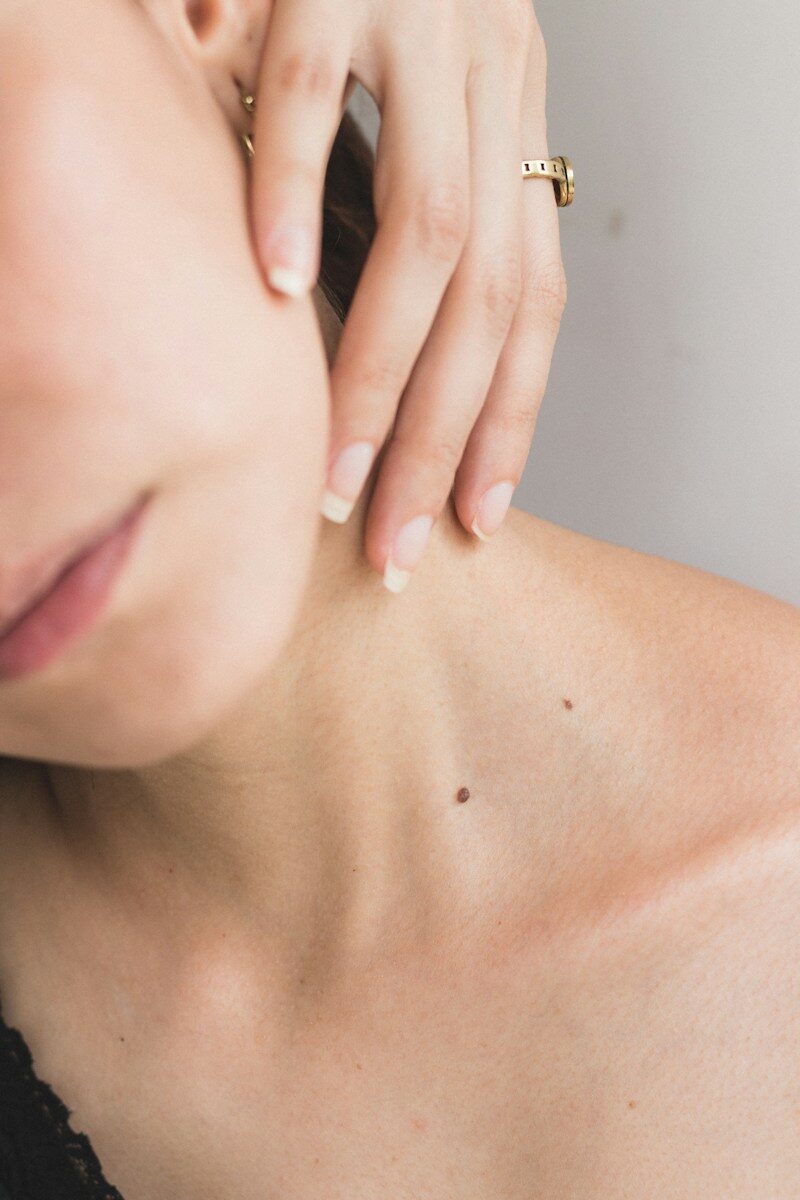
The neck ages on a different schedule from the face, and most routines pretend otherwise. Neck skin aging skincare fails when it treats the neck as an extension of the jawline, because the neck is not the face continued downward: it is thinner, drier, less supported, and exposed to the same sun with far less of the skin’s own defence. The result is familiar — horizontal lines that appear earlier than facial lines, a crepey texture that no facial moisturiser quite fixes, and a décolletage that shows sun damage the face learned to hide. This article maps why neck and décolletage skin ages differently, which ingredients address it, and which ones the neck cannot tolerate.
Clinical TL;DR
- Neck skin is thinner than facial skin, with fewer sebaceous glands and less collagen support, so it loses moisture faster and shows lines earlier.
- The décolletage carries decades of unprotected sun exposure, which is why its pigment and texture changes often look older than the face.
- Four mechanisms drive visible neck aging: ultraviolet damage, collagen and elastin decline, constant movement and folding, and a thinner barrier that dries out first.
- Retinoids, peptides, vitamin C derivatives and niacinamide all have a role — but the neck tolerates them at lower levels and slower frequencies than the face.
- Sunscreen on the neck and chest every morning is the single highest-value step; everything else is secondary.
- A neck routine is a diluted, slower version of a facial routine, not a copy of it.
Why Neck Skin Is Not Facial Skin: The Anatomy
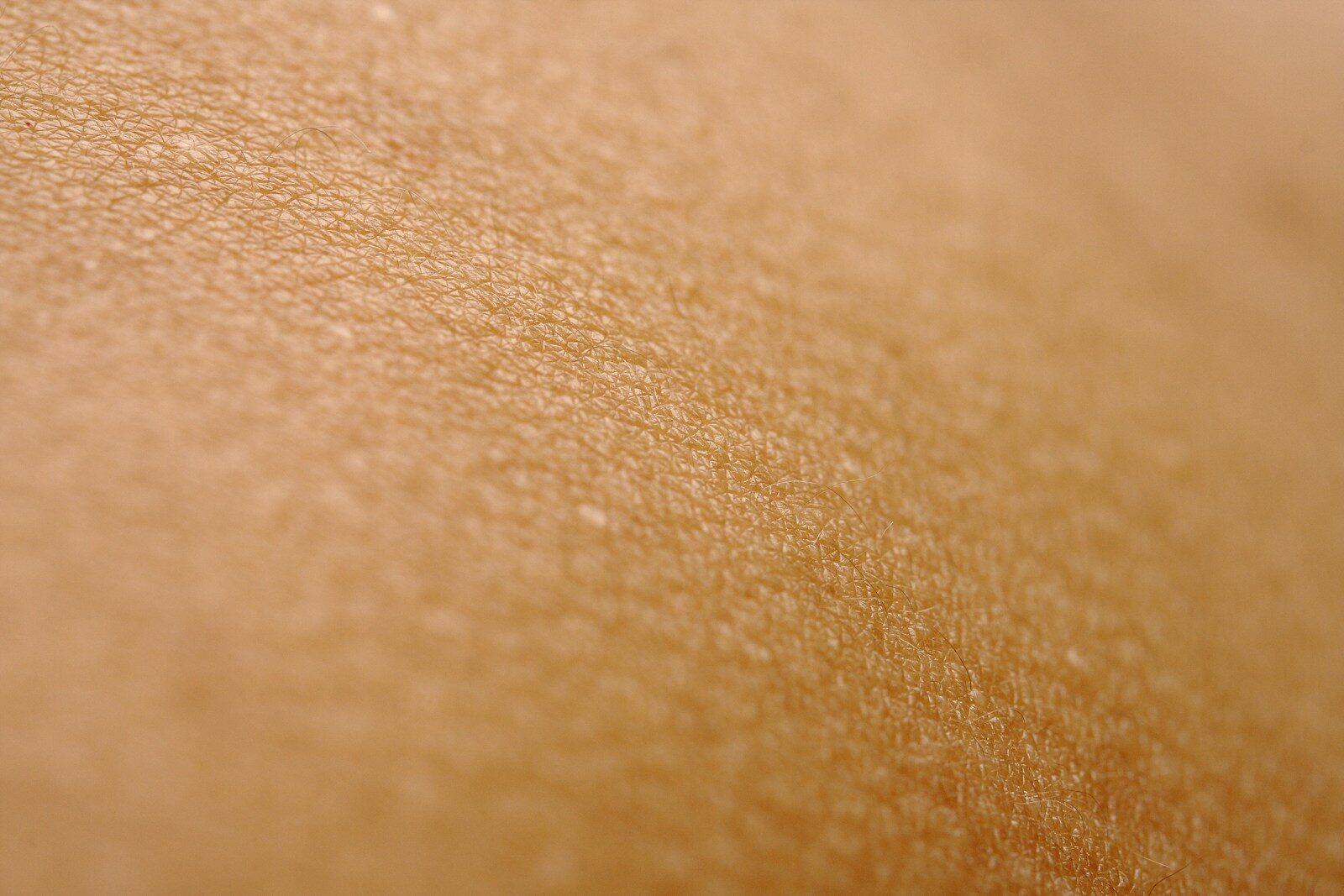
The difference starts in the structure. Facial skin is supported by a dense network of collagen and elastin, fed by a rich supply of sebaceous glands that keep the surface supple. Neck skin has a thinner stratum corneum, fewer oil glands, and less subcutaneous fat beneath it. The platysma — a thin sheet of muscle that runs from the jaw to the chest — lies directly under the skin with almost no fat cushioning between the two, so the skin follows every movement of the muscle and every fold of the neck.
That thinness has two consequences. First, the barrier is weaker: fewer lipids in the stratum corneum means water escapes faster, which is why the neck is often the first area to feel dry and look crepey when the air turns cold or the routine turns aggressive. Second, the skin has less structural reserve. When collagen declines with age, the face has more of it to lose before the change is visible; the neck shows the same decline sooner, as horizontal lines and a loss of firmness that appears in the thirties and forties rather than later.
Movement completes the picture. The neck folds every time you look down, and the modern habit of looking down at a phone for hours a day repeats that fold thousands of times. These horizontal lines are not purely a product of aging — they are mechanical, the result of skin creasing along the same line again and again. A routine that ignores movement will always underperform on the neck, because it is treating a structural problem as though it were only a surface one.
The Four Mechanisms of Visible Neck Aging
Visible neck aging is not one process but four, and each one responds to a different ingredient.
Ultraviolet damage is the largest. UV radiation breaks down collagen and elastin fibres, triggers melanin overproduction in patches, and thins the dermis over time. On the décolletage, where protection has historically been weakest, the result is photoaging that is often a decade ahead of the face: uneven tone, freckling and a leathery texture that appears long before the same changes show on the cheek. Sunscreen is the only ingredient in this article that prevents rather than manages, and it is the only one that works on all four mechanisms at once, by stopping the damage before it happens.
Collagen and elastin decline is the second. Collagen production falls steadily from the twenties onward, and elastin — the protein that lets skin snap back after stretching — is barely replaced at all in adult life. On the neck, where the collagen scaffold was thinner to begin with, the decline shows as laxity and horizontal lines rather than the fine lines the face develops. Nothing in a cosmetic product rebuilds elastin; the honest aim is to support the collagen that remains and to protect it from further breakdown. The perimenopausal skin post describes the same hormonal backdrop from the inside: estrogen decline reduces lipid production and collagen density across the whole skin, and the neck, already thin, feels that decline first.
Mechanical folding is the third, and the most underestimated. The neck creases when you sleep on your side, when you read, when you look at a phone, and the crease forms along the same line every time. Over years, the repeated folding breaks down the dermal structure along that line, and the line becomes permanent. No cream unfolds a fold. What a routine can do is keep the skin hydrated and supple so the fold forms less deeply, and reduce the inflammation that follows repeated creasing.
Barrier thinness is the fourth. The neck’s weaker barrier loses water faster, and dry skin shows every line more clearly — the same crepey appearance the TEWL post describes on the face, amplified by the neck’s thinner starting point. Hydration does not reverse aging, but it changes how aging looks: a well-hydrated neck shows softer lines, a smoother surface, and a more even light reflection than a dehydrated one. This is the mechanism with the fastest visible payoff, and the one most routines get wrong by reaching for the strongest active first instead of the barrier first.
Neck Skin Aging Skincare: Four Ingredients, Evaluated Against the Neck
A neck routine needs the same active ingredients as a facial routine, used more gently. Each of the four below earns its place; each also carries a tolerance warning the neck makes non-negotiable.
Retinoids are the strongest evidence-backed option for the appearance of lines, and the hardest for the neck to tolerate. Retinol and retinal accelerate cell turnover and support the appearance of collagen density, which is exactly what the aging neck needs — but the neck’s thin barrier means the same level that the face accepts without complaint can leave the neck red, flaking and stinging. The retinoid tolerance post sets out the protocol in full: start at the lowest available level, use it two evenings a week, and wait a fortnight before increasing frequency. On the neck, that protocol is not a cautious suggestion but the rule. Many people who use a retinoid nightly on the face do well applying it to the neck only twice a week, diluted in moisturiser, and never on the same evening as an exfoliant.
Peptides are the neck’s most forgiving active. Signal peptides, carrier peptides and neurotransmitter peptides each work differently — signal peptides suggest the skin produce more structural protein, carrier peptides deliver trace minerals, and neurotransmitter peptides relax the appearance of expression lines — and the signal, carrier and neurotransmitter peptides post maps all three families in detail. For the neck, the relevant family is the signal group, which addresses the appearance of lost firmness without the irritation a retinoid brings.
Vitamin C derivatives address the décolletage’s specific problem: pigment. The chest’s mottled tone is largely photoaging, and vitamin C supports a more even-looking tone while also contributing antioxidant defence against the UV exposure that continues every day. The stabilised derivatives — SAP, MAP, VC-IP and 3-O-ethyl ascorbic acid — are the right choice for the neck, because pure L-ascorbic acid at a low pH can sting thin skin. A derivative at a modest level, used in the morning under sunscreen, pairs the pigment work with the day’s protection, and it layers cleanly over peptides and under moisturiser.
Niacinamide is the neck’s barrier ally. Vitamin B3 supports the skin’s own ceramide production, which strengthens the barrier that the neck lacks, and it calms the appearance of redness and uneven tone. It is the only ingredient in this list with essentially no tolerance cost: the neck accepts it at the same levels the face does, it can be used morning and evening, and it pairs with everything else on the list. For a neck that is already reactive — stinging when products are applied, flaring after a retinoid — niacinamide is the ingredient to reach for first, because it restores the barrier that makes the other three tolerable.
What the Neck Cannot Tolerate
The neck’s tolerance limits are stricter than the face’s, and the mistakes are predictable. Strong exfoliating acids — glycolic acid at high levels, daily salicylic acid, aggressive peels — strip a barrier that is already thin, and the recovery takes longer on the neck than on the face. Daily high-level retinoid use without a ramp-up is the most common error, and the neck announces it quickly with redness and flaking. Fragrance in a neck product is a needless risk: the same scented cream the face tolerates can irritate the thinner neck skin.
Physical exfoliation deserves a specific warning. Scrubs and rough cloths on the neck abrade a stratum corneum that is already thin, and the damage is not visible until the skin is already sensitised. If exfoliation is used at all on the neck, it should be a gentle chemical exfoliant at a low frequency — once a week at most — and never on the same evening as a retinoid.
Prosumer Application: A Neck and Décolletage Routine That Lasts
A neck routine is a diluted, slower version of a facial routine, not a copy of it. The structure below assumes a neck that is currently calm; if it is already irritated, restore the barrier first with a simple moisturiser and a pause on actives, then begin.
Morning: cleanse gently or rinse with water, apply a niacinamide serum to the neck and décolletage, follow with a vitamin C derivative, then moisturiser, then sunscreen — and the sunscreen is the step that matters most. Apply it to the front and sides of the neck and across the whole décolletage, not just to the jawline, and reapply if you spend the day outdoors. A moisturiser with ceramides and cholesterol supports the barrier through the day; the barrier-cream teardown explains what to look for on the label.
Evening: after cleansing, apply a peptide serum to the neck and décolletage, then moisturiser. Twice a week, on evenings when no other strong active is used, add a retinoid at the lowest available level, diluted in moisturiser, and skip it the following evening if the skin feels tight. Increase to three evenings a week only after a fortnight without irritation. Never use a retinoid and an exfoliant on the neck on the same evening, and never apply a retinoid to skin that is already stinging.
For the longevity-appearance step, the neck rewards a botanical base applied once tolerance is established. Within Skin001’s formulation framework, that is the role of NilePearl™, the anti-aging botanical longevity base: used as the finishing layer on the neck and décolletage after the peptide serum, it supplies the barrier-supporting lipids and botanical extracts that the thin neck skin lacks, without adding another active the neck must tolerate. The principle is the same as on the face — the system is the applied example, not the treatment — and on the neck the gentleness of the base matters as much as the strength of the active.
Two habits complete the routine, and neither comes from a bottle. First, keep the phone at eye level where you can: reducing the hours spent looking down reduces the mechanical folding that etches horizontal lines. Second, sleep on your back when you can, or at least avoid pressing the neck into a crease for eight hours a night. Neither habit reverses existing lines, but both slow the mechanism that creates them, and on the neck — where the skin is thin and the margin is small — slowing the mechanism is the whole game.
FAQ
At what age should neck skincare start?
When the face routine starts. The neck’s thin barrier and constant sun exposure mean the same preventive logic applies: sunscreen from the twenties, a gentle active from the thirties, and barrier support throughout. Starting earlier costs little and preserves more.
Can I just use my face cream on my neck?
Yes, with two adjustments: use it at a lower active frequency on the neck, and always extend it below the jawline to the décolletage. The product is rarely the problem; the frequency and the coverage are.
Does neck cream actually work, or is it marketing?
The category is mostly marketing. What works is not a special neck cream but the right ingredients — retinoids, peptides, vitamin C derivatives, niacinamide — used at neck-appropriate levels and frequencies, under daily sunscreen. A product labelled for the neck is fine if its ingredients are right; it is not necessary.
Why does my neck sting when my face does not?
Because neck skin is thinner, with fewer oil glands and a weaker barrier, so the same product penetrates more readily and irritates more easily. Stinging is a signal to reduce the level or the frequency, restore the barrier, and reintroduce the active more slowly.
Can sunscreen alone improve the neck?
It cannot reverse existing lines, but it is the single highest-value step: it stops the ultraviolet damage that drives most visible neck aging, and a neck protected from further sun damage looks better within months than one that is not, because the skin is no longer fighting new damage while it recovers.
The CTA
Neck skin aging skincare is not a separate science from facial skincare — it is the same science applied to thinner, drier, more sun-exposed skin, with lower levels, slower frequencies and a stricter respect for the barrier. The neck ages differently because it is built differently: less collagen to lose, less oil to protect it, more sun to answer for, and a fold that repeats a thousand times a day. The ingredients that help are the familiar ones — retinoids, peptides, vitamin C derivatives and niacinamide — used gently, under daily sunscreen, with the barrier deciding the pace. Start with the sunscreen, add one active at a time, and give the neck the patience the face already gets. To see the pure compound ingredients and barrier-first bases that support a routine like this, explore Skin001’s pure compound ingredients and bases.