The Clinical Hook
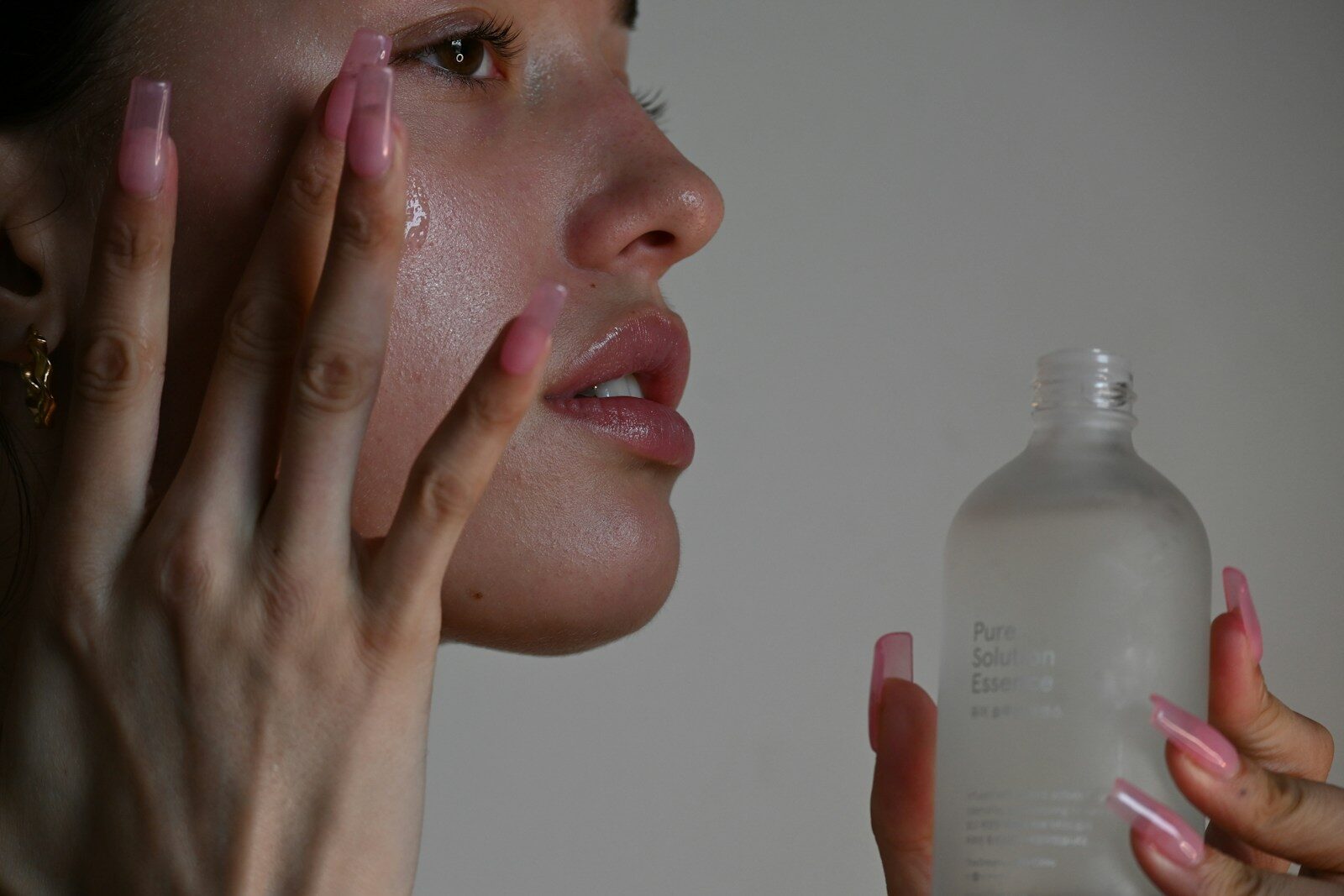
Anti-aging skincare usually sells a single promise — a molecule that turns back the clock — and the promise usually fails in the same place: the barrier. A formula can carry the most celebrated botanical actives in the world, and if the skin’s lipid seal is leaking, those actives arrive on a surface that cannot hold moisture, cannot tolerate stimulation, and cannot show the result. The NilePearl anti-aging botanical serum is built on the opposite premise: longevity appearance begins with the barrier, and botanicals earn their place by supporting it. This article explains that design — the aging-appearance pathway, the botanical ingredients evaluated against it, and the routine that lets a botanical base work cumulatively.
Clinical TL;DR
- Aging appearance is several processes at once: slower cell turnover, declining collagen and elastin appearance, a thinning lipid barrier, and cumulative oxidative stress from sun and environment.
- The barrier is the bottleneck. When the lipid seal thins, water escapes faster (transepidermal water loss), and the skin looks duller, less plump and less even — whatever the active on top of it.
- Polyphenols, bakuchiol, squalane and niacinamide are evaluated here for what each can and cannot contribute.
- NilePearl™ is Skin001’s anti-aging and botanical longevity base, the applied example of barrier-first longevity logic, not a promise about measured outcomes.
- The routine rule is barrier first, botanicals second, judged by photographs over eight to twelve weeks.
What “Longevity Appearance” Actually Means on Skin
“Longevity” is borrowed from medicine, where it means lifespan. On skin, in cosmetic language, it means something narrower: the appearance of skin that holds its structure, moisture and tone over time. Four processes drive it.
First, cell turnover slows. Young skin replaces its surface roughly every four weeks; with age the cycle lengthens, dull cells linger, and the skin reflects light less evenly — the tired, greyish cast no highlighter corrects.
Second, the structural proteins change. Collagen and elastin give skin its firmness and recoil; their production declines while the enzymes that break them down keep working. The result is fine lines that stay after the expression fades, and a jawline softer than it was a decade ago.
Third, the barrier thins. The lipid matrix is produced more slowly, and the hormonal shift of midlife accelerates the decline, as described in the companion post on perimenopausal skin. The result is dryness, tightness and a surface that marks more easily.
Fourth, oxidative stress accumulates. Ultraviolet light and pollution generate free radicals that damage lipids, proteins and the skin’s own antioxidant defences faster than they can be repaired. The result is uneven tone appearance and dullness.
None is a disease, and none is reversed by a cosmetic. What a cosmetic can do is support the appearance of each while respecting the barrier that carries them all. That is the standard a botanical longevity base must meet.
The Barrier Is the Longevity Story Nobody Tells
Most anti-aging marketing starts with the active and ends with the before-and-after photograph. The barrier-first reading starts one step earlier: can the skin hold what the active asks it to do?
The stratum corneum is bricks and mortar — dead cells held by a lipid matrix — and in aging-appearing skin that mortar is thin or patchy. The consequence is transepidermal water loss: water escaping faster than it should, leaving the surface dry, tight and rough-looking, and letting irritants in. A leaking barrier also stings more readily, which is why the strongest anti-aging actives — retinoids, strong acids, high-strength vitamin C — so often fail on the very skin that wants them most. The skin is not being stubborn; it is reporting that the order of operations is wrong.
A leaking barrier also cannot hold the humectants and emollients that give skin its plump, light-reflecting surface, so firmness and radiance appearance fade even when the deeper structures are still sound. The reader who says “my skin looks older than it feels” is describing the barrier, not the collagen.
Restore the seal, and the skin holds moisture, tolerates gentle actives and reflects light more evenly. Skip the seal, and every botanical in the bottle works on a surface that cannot show the result.
NilePearl Anti-Aging Botanical Serum: The Design Logic Behind the Base
The name is a deliberate image: a pearl is built layer by layer, slowly — and a botanical longevity base is built the same way, from cumulative layers of gentle support rather than one dramatic intervention. NilePearl™ is Skin001’s anti-aging and botanical longevity base, presented within Skin001’s formulation framework as the applied example of barrier-first longevity logic.
Three design choices define it. First, the barrier comes first: the base is built around lipid support, so the seal is addressed before any longevity ingredient is asked to work. Second, the longevity contribution is botanical and cumulative — plant-derived ingredients supporting the appearance of firmness, tone and radiance over weeks, rather than one aggressive active. Third, the irritant load is kept low by design — no strong acids, no high-strength exfoliation, no fragrance-driven sting — so the base can sit in a daily routine without becoming the thing the skin reacts to.
That third choice is where most “natural anti-aging” products fail quietly: a formula can list gentle botanicals and still sting if the base is harsh or the pH is wrong. Tolerance is a property of the whole formula, not of one hero botanical.
The Skin Concern It Addresses: Firmness and Radiance Appearance That Fade With the Barrier
The reader this base is built for is usually in her late thirties or beyond, or her skin has thinned through hormonal change, and she has found that her skin looks less firm and less radiant — not dramatically, but steadily. Her fine lines look deeper because the skin is less plump, and her tone looks uneven because the surface is rough.
For that reader, the answer is not a stronger active but a routine that rebuilds the barrier first. The ingredients below are the ones that fit that brief.
Four Botanical Ingredients, Evaluated Against the Longevity Question
Green tea polyphenols are the antioxidant workhorses. Polyphenols such as epigallocatechin gallate (EGCG) are discussed as helping neutralise the free radicals generated by ultraviolet light and pollution. Their role is to support a calmer, more even-toned appearance by reducing the daily oxidative load the skin must absorb. The honest limit: antioxidant support is invisible on day one — a background defence, judged over months rather than by what appears in a week.
Bakuchiol is the plant-derived retinol alternative that earns its place by tolerance. Extracted from the seeds of Psoralea corylifolia, it is discussed as supporting the appearance of smoother, firmer-looking skin without the flaking and adjustment period retinoids demand. The honest limit: the evidence base is younger and smaller than retinoids’. Bakuchiol is a gentle cumulative ingredient, not a retinoid replacement. For the reader whose barrier cannot afford a retinoid, that trade is the point.
Squalane is the surface comfort that makes the rest possible. Squalene is produced by human sebum; squalane is its stable, hydrogenated form, a lightweight, non-greasy emollient — and the lipid most tied to the barrier story, since declining sebum is one reason aging-appearing skin feels tight and papery. Squalane does not rebuild the intercellular mortar — it is not a ceramide — but it replaces some of the slip and softness declining sebum no longer provides. For the reader whose chief complaint is “my skin feels tight and looks dull,” squalane is the first, gentlest answer.
Niacinamide is the calmest multi-tasker in the cabinet. Vitamin B3 is discussed as supporting the skin’s own ceramide production, softening the appearance of uneven tone, and calming the look of redness — three jobs at once. Its tolerance profile is unusually forgiving, and it demands no adjustment period. The honest limit: niacinamide is a supporter, not a transformer. It improves tone and barrier comfort gradually, but will not resurface texture the way an acid does.
Read together, the four form a sequence: polyphenols defend, bakuchiol supports firmness appearance gently, squalane restores comfort, and niacinamide supports the skin’s own lipid production and tone — without asking the barrier to pay for any of it.
What NilePearl™ Is — and Is Not
Claim discipline matters most precisely here: a spotlight post about a proprietary system is one step from an advertorial, and this blog does not publish advertorials.
NilePearl™ is a base — a semi-ready botanical longevity system within Skin001’s formulation framework — designed around barrier-first, anti-aging-appearance logic. Its role is positioning and design intent: lipid-aware, botanical, built around the seal rather than a single hero ingredient.
It is not a treatment. It does not diagnose, treat or cure any condition, and it does not reverse hormonal change or restore lost collagen. It carries no measured-outcome claim: the language throughout is cosmetic and appearance-based, judged over weeks by the reader’s own photographs in consistent light. “Longevity” here describes the appearance of skin that holds its structure and moisture over time — not a lifespan claim, and not a promise that any single ingredient turns back the clock.
How NilePearl™ Fits With the Rest of the Routine
A base does not live alone, and the longevity reader’s routine is a system of parts that must not fight each other.
First, peptides. A gentle botanical base such as NilePearl™ is the natural partner to a peptide step: both work cumulatively and neither demands an adjustment period. The companion post on signal, carrier and neurotransmitter peptides explains the families — signal peptides that cue the skin’s own matrix maintenance, carrier peptides, and neurotransmitter peptides that address expression-line appearance. A water-based peptide serum before the base, on damp skin, is the classic correct order — water before oil, because oil seals the surface.
Second, the DNA-derived families. The companion post on PDRN and polynucleotides explains what those ingredients can and cannot claim in cosmetic translation. Their role is complementary: where NilePearl™ supplies botanical defence and barrier support, PDRN-family ingredients address the appearance of recovery in post-procedure-feeling skin. They belong in the same routine only once the barrier is supported — base first, specialist step second.
Third, retinoids. The rule, set out in the companion guide to retinoid tolerance, is that a retinoid belongs in a longevity routine only after weeks of barrier support, at a low frequency, with that support maintained throughout. NilePearl™ is the barrier support that makes that eventual introduction possible. If a retinoid previously caused flaking, the answer is to shorten the ladder, slow the frequency, and rebuild the barrier first.
Prosumer Application: A Botanical Longevity Routine That Respects the Barrier
For the reader working with finished or semi-ready compounds at home, the routine follows one rule: seal first, everything else second.
First, wash gently. A harsh cleanser on aging-appearing skin is not cleaning — it is stripping the little mortar that remains. A mild, non-foaming or low-foaming cleanser and lukewarm water will preserve more barrier than any cream can replace. If the skin feels tight after washing, the cleanser is too strong.
Second, layer in order of weight. A water-based humectant step on damp skin, then a peptide serum if one is used, then the botanical base, then — only if the skin still feels exposed — a moisture-sealing topcoat such as ZSerum™ on top. Give each layer a moment to settle; a routine applied in a hurry is a routine half-absorbed.
Third, introduce one change at a time. Two weeks with the base alone, before any other new active, lets the reader know what the product itself does. Patch test first on the jawline. If a peptide serum is added, it goes in the morning; any retinoid — introduced much later, at low frequency — goes at night, or on alternate nights. Never stack two new actives in the same week: when irritation appears, no one can tell which step caused it.
Fourth, protect the gains. Sun protection every morning remains non-negotiable, and it matters more, not less, for aging-appearing skin: ultraviolet exposure degrades collagen and lipids further. A comfortable daily sunscreen the reader will actually wear beats a perfect one in a drawer. Introduce any brightening or resurfacing product only after the barrier has had at least a month of this routine — on a sealed, calm surface, those products have a chance; on a leaking wall, they are irritation waiting to happen.
Fifth, know when to stop and ask. If stinging, redness or sensitivity persists beyond a few weeks, worsens rather than eases, or appears alongside any skin change that worries the reader, pause the product and discuss it with a clinician. Cosmetics address appearance; anything medical belongs to medicine. The same applies before starting any new active while pregnant, planning pregnancy, or using prescription skin medication.
FAQ
What does “botanical longevity” mean in skincare?
In cosmetic language, it means the appearance of skin that holds its structure, moisture and tone over time — supported by plant-derived ingredients such as polyphenols and bakuchiol, built on a healthy barrier. It is not a lifespan claim.
Can botanical ingredients really help aging-appearing skin?
They can support the appearance of firmness, tone and radiance — gradually, and only on a barrier that can hold moisture. Polyphenols defend against oxidative stress, bakuchiol supports firmness appearance gently, and squalane restores surface comfort. None resurfaces skin the way a strong acid does.
How is NilePearl™ different from a regular anti-aging serum?
Its design hierarchy: barrier first, botanical and cumulative longevity rather than forceful, and a low irritant load by design. It is a base built for skin that cannot tolerate forceful actives — the applied example of this article’s science, not a promise about measured outcomes.
How long should I wait before judging it?
Eight to twelve weeks, by photographs in the same light rather than by daily mirror checks. Botanical longevity ingredients and barrier lipids work at the pace of skin turnover.
Can I use NilePearl™ with a retinoid or a peptide serum?
Yes, with separation and sequence. Build the barrier with the base first, for at least a month, then introduce a peptide serum in the morning and, much later, a retinoid at a low frequency in the evening. If flaking or lingering tightness appears, the frequency goes back down.
The CTA
Aging appearance is not a single problem — it is a barrier that thins, a surface that turns over more slowly, and a daily oxidative load that adds up. The botanical answer is not a stronger active but a better order: seal the barrier first, defend it with polyphenols, support firmness appearance gently with bakuchiol, and give the routine months, not days. Judge the NilePearl anti-aging botanical serum the way this article judges it: not by how quickly it tingles, but by whether the skin still feels comfortable at four in the afternoon, a month later. Explore Skin001’s pure compound ingredients and bases, and build the barrier-first longevity routine your skin’s next chapter needs.