The Clinical Hook
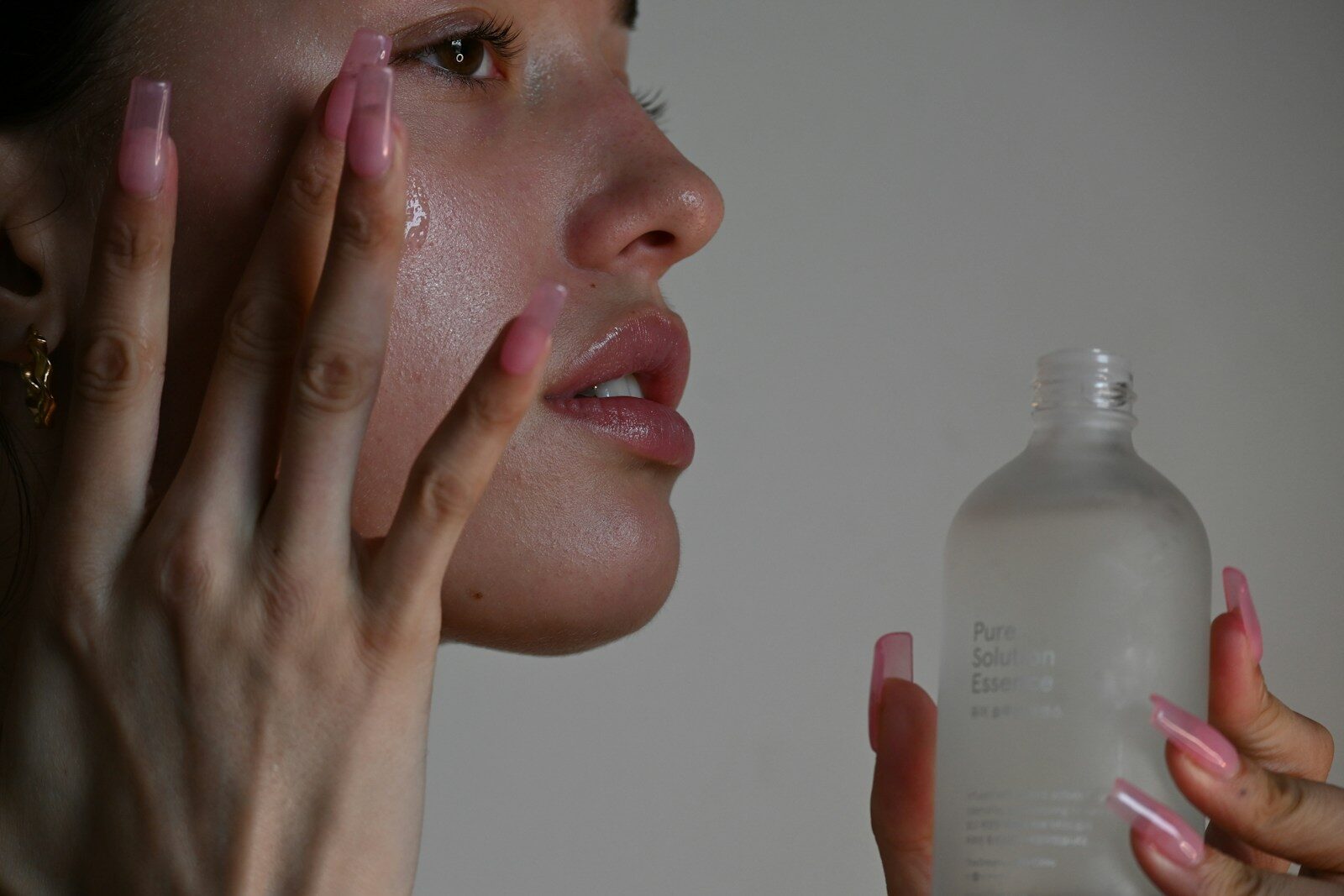
There is a particular kind of dryness that does not respond to drinking more water, or to a heavier cream, or to the routine that worked perfectly five years ago. The skin feels tighter after washing, looks duller by afternoon, and seems to lose moisture almost as fast as it is applied — as if the container itself had sprung a leak. For many women in perimenopause, that leak is real, and it is not a failure of effort. It is a change in the wall.
Perimenopause is the years-long transition in which estrogen levels fluctuate and gradually decline, and skin is one of the places that transition shows. Estrogen is involved in the skin’s lipid production, collagen maintenance and water-holding capacity, so as its levels fall, the skin’s own mortar — the lipids that seal moisture in — thins. The result is not one problem but a cluster: more water escaping, more sensitivity to products that once felt fine, and a surface that looks less plump and less even. This article explains that cluster in barrier terms, evaluates the four lipid ingredients the launch matrix pairs with it, and ends with a barrier-first strategy that respects a simple truth: when the wall is thinner, you rebuild the wall before you decorate the house.
Clinical TL;DR
- Menopausal skin dryness is, in barrier terms, largely a lipid story: declining estrogen is associated with reduced sebum and intercellular lipid production, which weakens the skin’s seal and raises transepidermal water loss.
- The skin barrier is built from three lipid families in a working ratio — ceramides, cholesterol and free fatty acids — and perimenopausal skin is discussed as losing ground across all three, not just one.
- The four ingredients evaluated below — squalane, phytosteryl esters, cholesterol and ceramide complexes — each play a different role in that wall: squalane as a skin-identical emollient, phytosteryl esters as plant-derived lipid support, cholesterol as a structural component, and ceramide complexes as the mortar itself.
- The strategy is barrier-first: restore the seal, calm the surface, and only then consider brightening or resurfacing steps — and introduce those steps one at a time, on a barrier that can actually carry them.
- Cosmetic language applies throughout: this article addresses the appearance of dryness, dullness and sensitivity. It does not treat hormonal change, and hormonal health questions belong with a clinician.
Why the Wall Thins: Estrogen, Lipids and Water Loss
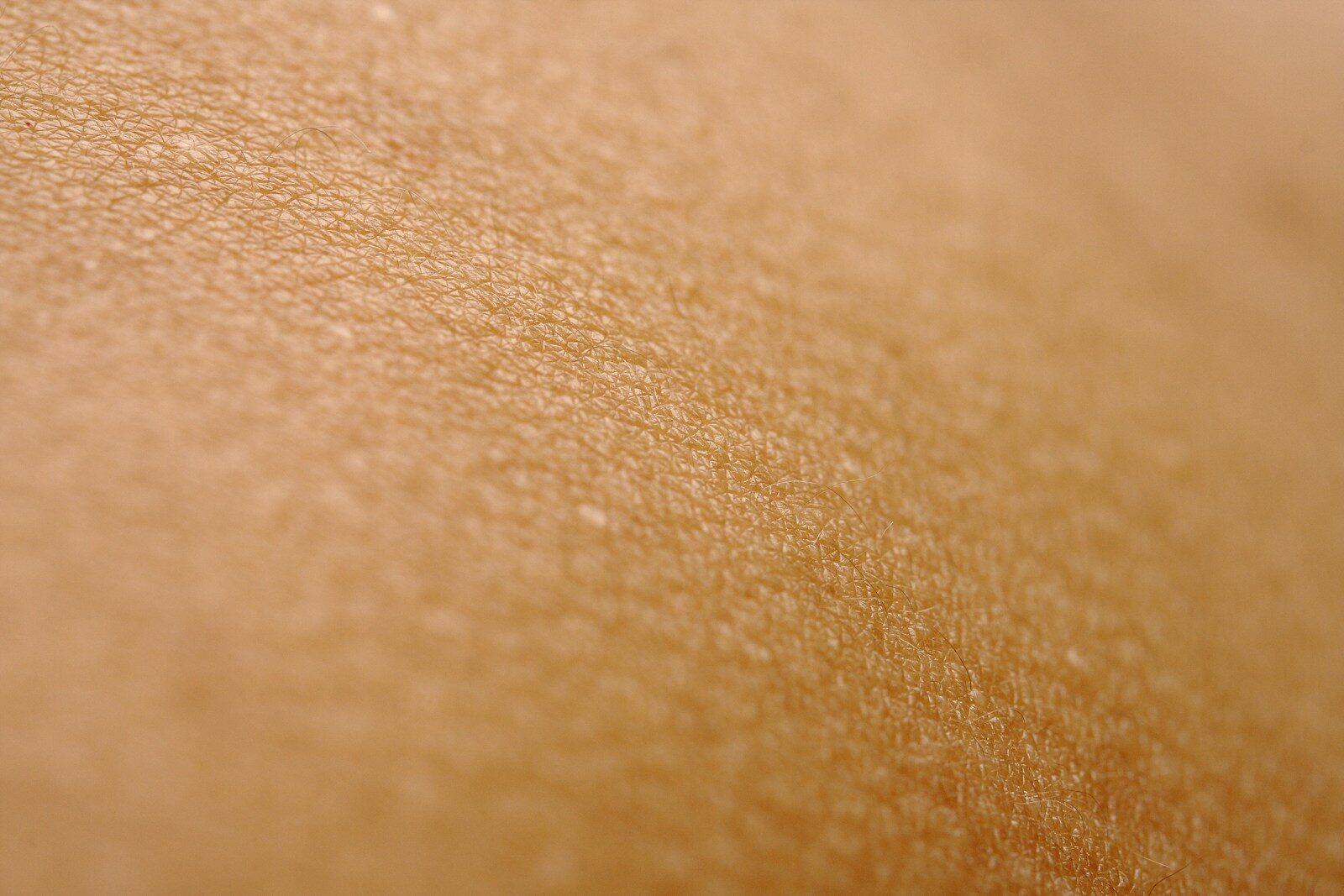
To understand perimenopausal dryness, start with the wall itself. The outermost layer of skin, the stratum corneum, is often described as bricks and mortar: the bricks are dead skin cells, and the mortar is the lipid matrix that holds them together and seals water inside. That mortar is roughly half ceramides, a quarter cholesterol, and a quarter free fatty acids, and the ratio matters as much as the total amount — a wall built from one lipid alone is not the same wall.
Estrogen’s role in this picture is supportive rather than structural. It is understood to support sebaceous activity, collagen synthesis and the skin’s water-binding capacity, so when estrogen declines, several supports weaken at once. Sebum output tends to fall, which removes one of the skin’s surface emollients. The intercellular lipid matrix is discussed as thinning, which loosens the seal. And the skin’s ability to hold water in its upper layers declines, which is why perimenopausal skin can feel dry even in humid weather and even after a rich cream: the cream sits on a wall that cannot hold what it is given.
The measurable consequence is transepidermal water loss — water escaping through the barrier faster than it should. The companion post on transepidermal water loss explains that mechanism in full; here, the point is the direction of travel. When water loss rises, the skin compensates in ways that create the rest of the perimenopausal picture: the surface roughens, fine lines look more pronounced because the skin is less plump, sensitivity rises because irritants penetrate more easily, and products that once felt neutral now sting or flake. None of this is a single ingredient’s failure. It is a wall problem, and wall problems are solved at the wall.
One boundary matters before the ingredients, and this blog will not blur it. Perimenopause is a medical life stage, and its management — including any question of hormonal treatment — belongs with a clinician. Cosmetics do not replace estrogen, do not reverse hormonal change, and should never be presented as doing so. What cosmetics can do, honestly, is support the appearance of the skin that hormonal change leaves behind: a better-sealed, calmer-looking, more comfortable surface. That is a worthwhile job, and it is the only job claimed here.
The Four Lipids, Evaluated
Squalane is the most immediately intuitive of the four, because it is already a skin molecule. Squalene is produced by human sebum; squalane is its stable, hydrogenated form, used in skincare as a lightweight, non-greasy emollient. Its role in a perimenopausal routine is surface-level and honest: it replaces some of the slip and softness that declining sebum no longer provides, without heaviness and without the comedogenic reputation of thicker oils. It does not rebuild the intercellular mortar — it is not a ceramide — but it makes the surface feel comfortable while the deeper work happens, and it layers well under richer creams for skins that want softness without weight. For the reader whose chief complaint is “my skin feels tight and papery,” squalane is the first, gentlest answer.
Phytosteryl esters are plant-derived sterols — the plant kingdom’s version of cholesterol — esterified for use in skincare. Their interest for lipid-depleted skin is structural sympathy: sterols are part of the barrier’s own architecture, so plant sterols are discussed as supporting the lipid matrix from a complementary angle to cholesterol itself. In practice they appear most often in richer creams and balms aimed at dry, mature-looking skin, where they contribute to the feeling of a cushioned, protected surface. They are not a substitute for ceramides, and they do not carry the evidence base of the barrier’s own lipids — but as one voice in a lipid chorus, they add depth to a formula that squalane alone cannot give.
Cholesterol is the ingredient most often underrated in consumer discussion, and the one this article wants to restore to its proper place. Cholesterol is not a villain in skincare; in the stratum corneum it is a structural lipid in its own right, roughly a quarter of the mortar, and it is understood to organise the lipid layers into their working, water-tight arrangement. A barrier formula without cholesterol is like a wall built from bricks and one kind of mortar: it may look complete, but its structure is less organised than the real thing. In perimenopausal skin, where the whole lipid matrix is thinning, cholesterol’s contribution is therefore not decorative — it is architectural. It appears in the better barrier creams precisely because formulators who understand the ratio include it, and the reader checking an ingredient list for barrier support should look for it alongside ceramides, not instead of them.
Ceramide complexes are the mortar itself. Ceramides are the largest single family in the intercellular lipid matrix, and the companion post on the barrier-lipid alphabet explains the alphabet — NP, AP, EOP and their cousins — in full. For perimenopausal skin, the relevant point is simpler: ceramide complexes in a finished product are an attempt to top up the skin’s own declining supply, and they are the ingredient most directly aimed at the water-loss problem. A ceramide-containing cream, used consistently, is discussed as supporting the appearance of a better-sealed, calmer surface — less tightness after washing, less mid-afternoon dullness, a surface that holds the rest of the routine rather than shedding it. No single ceramide does this alone, which is why the better products use complexes, and why the ratio question from the barrier-cream teardown matters: ceramides without their cholesterol and fatty-acid partners are an incomplete wall.
Read together, the four form a sequence, not a shopping list: squalane softens the surface, phytosteryl esters add sterol depth, cholesterol organises the structure, and ceramide complexes supply the mortar. A routine that contains all four, in a finished product or across a small set of compatible products, is addressing the wall at every level — which is exactly what a thinning wall needs.
Prosumer Application: A Barrier-First Routine for Lipid-Depleted Skin
For the reader working with finished or semi-ready compounds, the routine follows one rule: seal first, everything else second. First, wash gently. A harsh cleanser on lipid-depleted skin is not cleaning — it is stripping the little mortar that remains. A mild, non-foaming or low-foaming cleanser, lukewarm water, and no double-cleansing heroics on a normal day will preserve more barrier than any cream can replace afterwards. If the skin feels tight after washing, the cleanser is too strong, whatever its marketing claims.
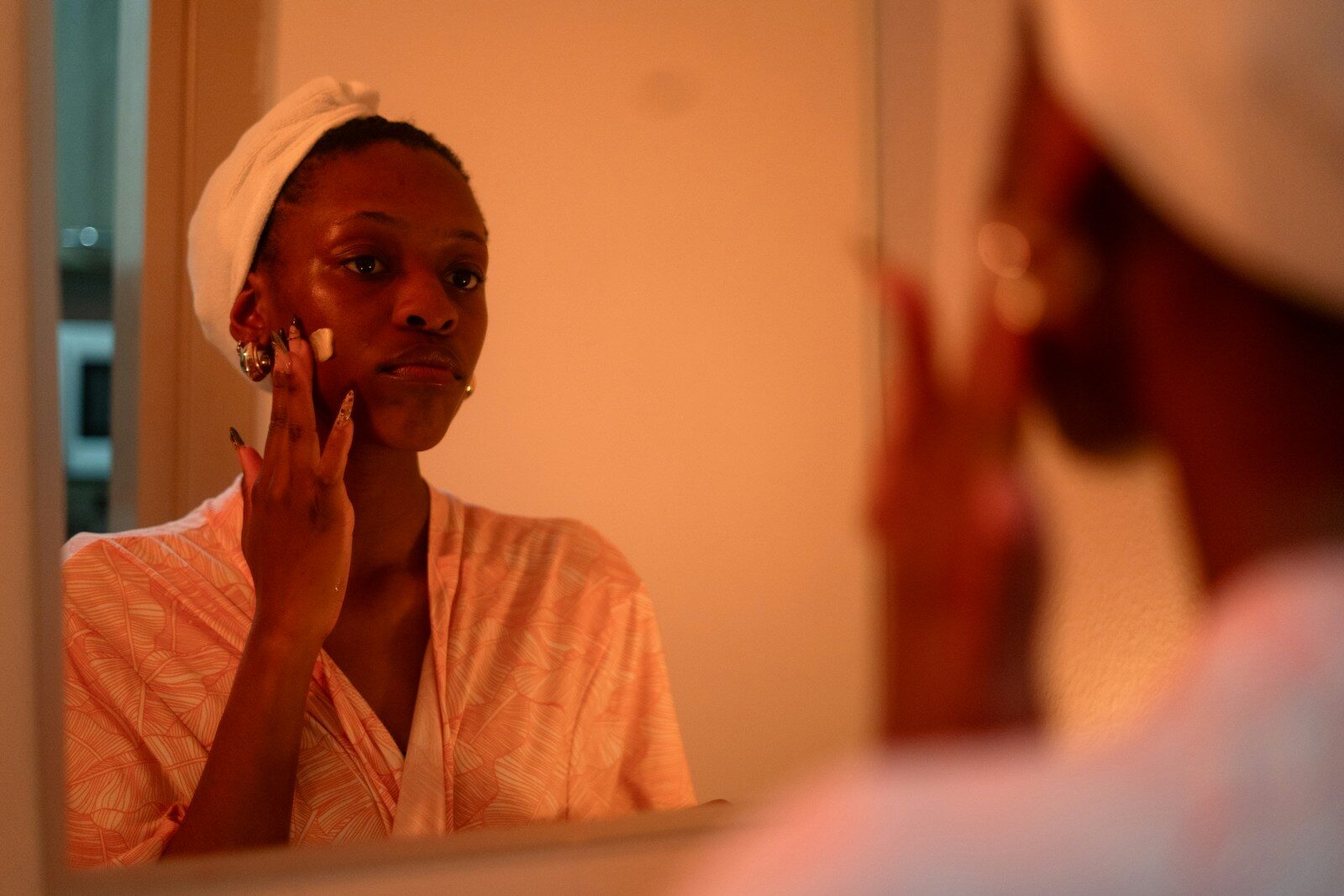
Second, layer lipids in order of weight. A water-based humectant step on damp skin, then a ceramide- and cholesterol-aware cream, then — only if the skin still feels exposed — a squalane or light oil seal on top. This is the order that respects the wall: water first, mortar second, surface seal last. Reversing it, oil before cream, traps less and wastes more. Give each layer a moment to settle; a routine applied in a hurry is a routine half-absorbed.
Third, protect the gains. Sun protection every morning remains non-negotiable, and it matters more, not less, for perimenopausal skin: ultraviolet exposure degrades collagen and lipids further, and a thinning wall is a less forgiving one. A comfortable, daily sunscreen the reader will actually wear beats a perfect one left in a drawer. And introduce any brightening or resurfacing product only after the barrier has had at least a month of this routine — on a sealed, calm surface, those products have a chance; on a leaking wall, they are irritation waiting to happen.
Within Skin001’s formulation framework, this is the role of InfantSKIN™: a system presented as the applied example of the barrier-first logic above — lipid-aware, mature-skin-oriented, designed around the seal rather than around a single hero ingredient — rather than around a claim about measured outcomes. As with every soft-embed in this blog, that is positioning and design intent, not a promise about results. And the guardrail that governs all home boosting applies here with full force: work with finished or semi-ready compounds, follow their label directions, and let the barrier rebuild on a skin-renewal timescale, not an overnight one.
FAQ
Why does my skin feel dry even though I use a rich cream?
Because a rich cream on a leaking wall is water poured into a cracked cup. If the intercellular lipid matrix is thin, moisture escapes as fast as it is applied. The fix is barrier support — ceramides, cholesterol and fatty acids in a working ratio — before, or alongside, richness.
Is perimenopausal dryness permanent?
The hormonal context is long-term, but the skin’s appearance is not fixed. A consistent barrier-first routine is discussed as supporting a softer, calmer-looking surface over weeks and months, even though it does not change the underlying hormonal picture. Judge it over months, not days.
Can I still use active ingredients like retinoids or vitamin C?
On a sealed barrier, yes — introduced one at a time, at a comfortable frequency, with barrier support maintained throughout. On a leaking, reactive barrier, actives are the fastest route to irritation. Seal first, then add, and pause the active — not the barrier support — if sensitivity appears.
Does squalane replace a ceramide cream?
No. Squalane softens the surface; ceramides rebuild the mortar. They are companions, not substitutes, and a routine that needs both should contain both.
When should I talk to a clinician instead of changing my skincare?
When hormonal symptoms worry you, when skin changes are sudden, severe or unlike anything described here, or when any skin change is new, changing or concerning. Cosmetics address appearance; hormonal health and diagnosis belong to medicine.
The CTA
A thinner wall is not a failed routine — it is a different starting point, and it asks for a different strategy. Seal the barrier first, with the lipids the skin itself is losing; calm the surface before chasing brightness; and give the routine months, not days, to show its work. Judge a perimenopausal routine the way this article judges it: not by how rich it feels on day one, but by whether the skin still feels comfortable at four in the afternoon, a month later. Explore Skin001’s pure compound ingredients and bases, and build the barrier-first routine your skin’s new chapter actually needs.