
The Clinical Hook
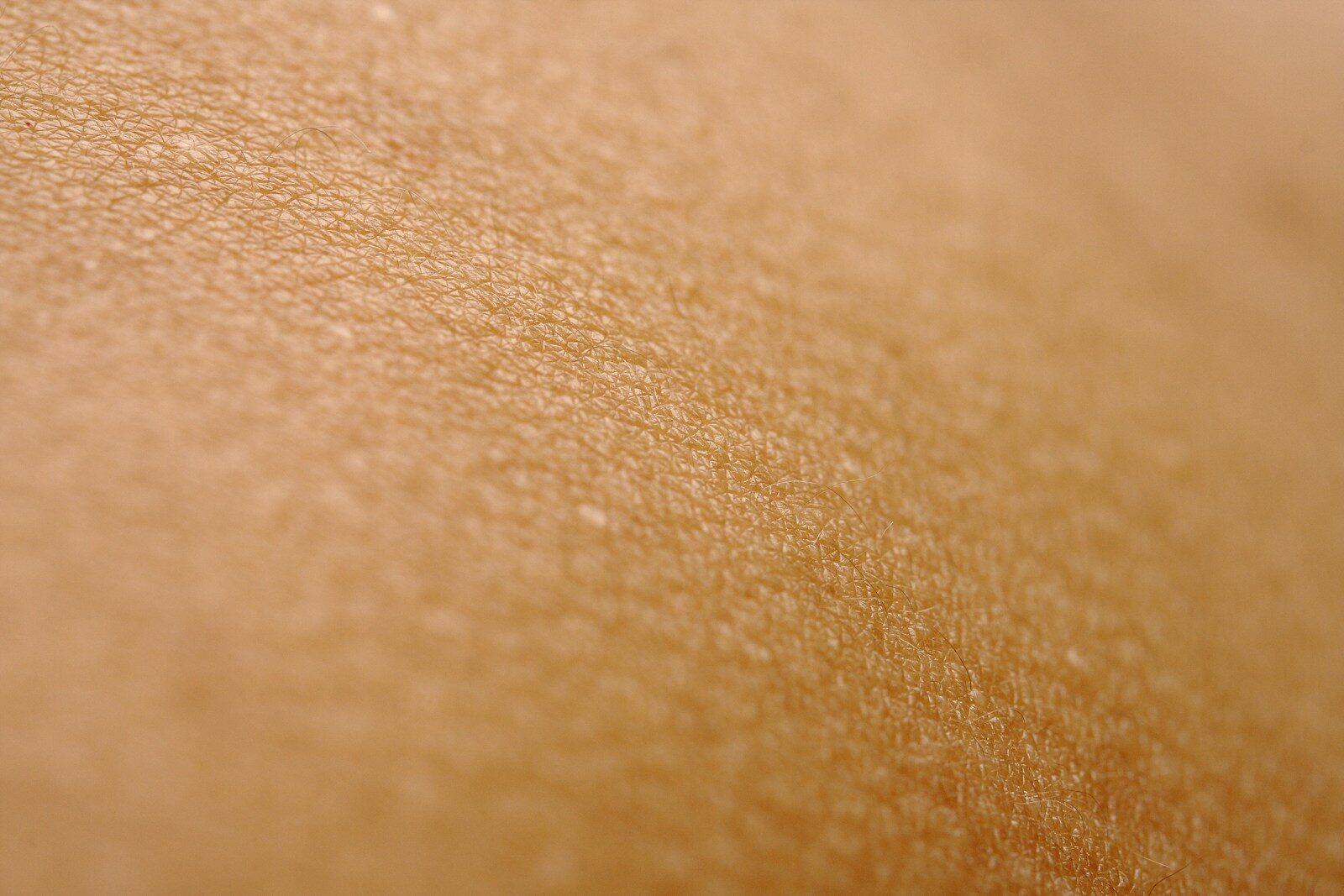
Run a hand over the back of an upper arm or the front of a thigh, and the skin may answer with a texture the eye barely registers but the hand cannot miss: tiny, firm bumps, each sitting at a hair follicle, like permanent goosebumps that never quite settle. On legs, the same story can look different — a scatter of dark dots at the follicles after shaving, the look that earned the nickname “strawberry legs.” Different names, different sites, and — this is the part most routines get wrong — not quite the same mechanism. Treating them as one problem, with one aggressive scrub, is how a texture concern becomes an irritation concern.
The question at the heart of this article, keratosis pilaris, is really a question about a plug: why keratin, the protein skin is supposed to shed, builds up inside the follicle instead, and what kind of routine persuades it to leave without stripping the barrier around it. This article separates the two looks, evaluates the four ingredients the launch matrix pairs with them, and ends with a controlled-exfoliation body routine built on a simple rule — soften the plug, support the barrier, and leave friction out of it.
Clinical TL;DR
- Keratosis pilaris is, in cosmetic terms, a keratin-plug story: excess keratin collects at the hair follicle, forming small, rough bumps, most often on the upper arms, thighs and buttocks.
- “Strawberry legs” is a look, not a single condition: dark dots at leg follicles can come from visible hair just below the surface, from follicles darkened after shaving irritation, or from keratin plugs themselves — and the routine should follow the cause, not the nickname.
- The four ingredients evaluated below each do a different job: urea softens and hydrates, lactic acid smooths the surface, LHA exfoliates inside the follicle more gently than a scrub, and barrier lipids seal the result.
- Aggressive scrubbing is the classic error: it roughens the barrier, invites redness, and leaves the plugs themselves largely untouched, because a plug sits inside the follicle, not on top of it.
- The routine is controlled, not heroic: one exfoliating step at a time, barrier support every day, friction reduced where skin rubs, and patience measured in weeks.
Two Looks, Two Mechanisms
Keratosis pilaris begins with a normal process going slightly overboard. Skin constantly produces keratin, the tough protein that forms its outer layer, and constantly sheds it. In keratosis pilaris, keratin accumulates around the hair follicle instead of shedding cleanly, forming a small plug that blocks the follicle opening and raises a bump. The bump itself is the plug, not dirt and not a spot to be squeezed — and squeezing is the fastest way to turn a texture concern into redness and marks that linger far longer than the bump would have.
The bumps tend to cluster where follicles are dense and skin is often covered: the backs of the upper arms, the fronts of the thighs, the buttocks, and sometimes the cheeks. They are usually more felt than seen, a sandpaper texture under the palm, and they often look more pronounced when skin is dry — winter air, long hot showers and harsh cleansers all make the surface rougher, which makes the bumps easier to feel and to see. That seasonal swing is a useful diagnostic clue in cosmetic terms: a texture that worsens with dryness is a texture whose barrier is part of the story.
“Strawberry legs” needs more care, because the nickname covers at least three different pictures. The first is simply hair: dark, coarse hair visible just beneath the skin surface after shaving, showing through as dots at each follicle. No product smooths that away, because there is no plug to dissolve — the dot is the hair itself. The second is shaving irritation: follicles reddened or darkened after a razor has dragged across dry skin, leaving a dotted pattern that is really a record of friction. The third is keratosis pilaris on the legs, where the dots are keratin plugs. A routine that helps the third does little for the first and can worsen the second if it adds exfoliation on top of razor friction. Naming the cause before buying the product is not pedantry; it is the whole decision.
One boundary belongs here before the ingredients, and this blog will not blur it. This article addresses appearance — bumps, roughness and dotted legs as cosmetic concerns. Skin that is painful, inflamed, spreading quickly, or worrying in any way is not a cosmetic project; it belongs with a clinician or dermatologist. The same applies to any bump that changes shape, bleeds, or does not behave like the texture described here. Cosmetics smooth a surface; they do not diagnose what is underneath it.
The Four Ingredients, Evaluated
Urea is the quiet workhorse of this routine, and the easiest to misunderstand. It is a natural moisturising factor — a molecule skin itself produces — and in finished body products it plays two roles at once: it draws water into the outer skin layer, and it softens keratin. That combination is exactly what a keratin plug needs: a plug is hard, dry keratin, and a softened plug sheds more easily than a dry one. Urea is therefore less an exfoliant in the classic sense than a conditioner for the material being shed. Used daily, it addresses the dryness that makes bumps feel worse, while slowly loosening the plug from within.
Lactic acid is the surface smoother. It belongs to the alpha-hydroxy acid family, the acids that loosen the bonds between surface skin cells so the outermost layer renews more evenly. On body skin, that means a surface that feels less rough to the hand and reflects light more evenly to the eye — the roughness that makes keratosis pilaris visible is, in part, a surface-cell problem, and lactic acid addresses it directly. Among its family it is also the gentler, more hydrating member. The discipline is frequency, not strength: a body product used a few times a week, followed by moisturiser, smooths steadily; the same product used daily on freshly shaved or irritated skin invites the redness it was meant to reduce.
LHA, lipohydroxy acid, is the follicle specialist of the four — and the reason this article can promise something a scrub cannot. LHA is a derivative of salicylic acid, designed to be more lipophilic, which in practical terms means it is more comfortable working inside the oil-rich environment of a follicle than on the dry surface alone. Where lactic acid smooths the surface, LHA is discussed as working at the follicle opening itself, loosening the material that forms the plug. That makes it the most targeted of the four for keratosis pilaris, and also the one that most rewards restraint: used too often, or layered on top of lactic acid on the same evening, it is still an exfoliant, and two exfoliants on one evening are a stacking error.
Barrier lipids are the seal that makes the other three last. The companion post on the barrier-lipid alphabet explains what the seal is made of — ceramides, cholesterol and free fatty acids in a working ratio — and body skin needs that seal just as facial skin does, even though body routines talk about it less. Every exfoliating step asks the barrier to reseal afterwards; a body cream rich in barrier lipids is what does the resealing. Without it, the routine is all opening and no closing. The companion post on transepidermal water loss describes that leak in full, and on legs and arms it shows up as the tight, papery feeling after a shower.
Read together, the four form a sequence, not a shopping list: urea softens the plug and hydrates, lactic acid smooths the surface, LHA works at the follicle, and barrier lipids seal the result. No single one of them is the answer, and all four on the same evening is not a stronger answer — it is a stacking error. The routine below spaces them out.
Why Scrubbing Fails
The instinct with bumps is to scrub them away, and it is worth understanding precisely why that instinct misfires. A physical scrub — a gritty mitt, a salt polish, an aggressive brush — works on the surface, and a keratin plug sits inside the follicle. Scrubbing the surface therefore does what surface work does: it roughens the barrier, creates micro-irritation, and leaves the plug itself largely in place. What it removes is the skin around the plug, which is why scrubbed skin often looks redder and feels rougher the next day, even though it felt smoother in the shower.
Friction is the same problem in a slower form. Tight clothing that rubs the same patch of thigh or arm all day, a razor dragged over dry skin, a towel used like sandpaper — each one is a small, repeated insult to the follicle area, and follicles under repeated friction tend to look worse, not better. This is especially relevant to the shaving-related version of strawberry legs: a dotted pattern caused by friction will not be fixed by adding more friction, in scrub form, on top of it. The first intervention for friction-caused dots is less friction — a sharp razor, a lubricating shave product, shaving with the grain on sensitive areas, and no exfoliating step on shaving day.
Heat and water matter too. Long, hot showers strip surface lipids, so lukewarm water, a gentle cleanser, and moisturiser applied while skin is still slightly damp are the conditions under which the exfoliating steps can work without the barrier paying for them.
Prosumer Application: A Controlled-Exfoliation Body Routine
For the reader working with finished or semi-ready compounds, the routine has five steps, in order.
First, name the cause. Before any exfoliant is bought, decide which picture is in front of you. Bumps felt on the upper arms and thighs, worse in dry weather, point toward keratin plugs. Dots on the legs that appear after shaving and fade between shaves point toward hair visibility or shaving friction. Dots that are red, painful or spreading point away from cosmetics altogether, toward a clinician.
Second, moisturise daily, exfoliate on selected days. A urea-containing body lotion or cream, used daily after showering, is the base layer of this routine — softening, hydrating, and barrier-supporting on every day, including the days when nothing else happens. The exfoliating step — a lactic-acid product or an LHA product, not both — is used a few times a week, on skin that has not just been shaved and is not irritated. This is the same one-new-active discipline as the companion post on retinoid tolerance applies to the face: introduce one exfoliant, give it weeks, and judge it at the end of the second month, not on day three.
Third, seal after every exfoliating step. On exfoliation days, the barrier-lipid layer is not optional. A ceramide- and cholesterol-aware body cream after the exfoliating product is what reseals the surface the exfoliant just opened, and it is what prevents the tight, dry feeling that makes people abandon the routine. On non-exfoliation days, the same cream — or the urea lotion alone, if the skin feels comfortable — keeps the seal maintained. Think of it as closing the door after opening it: a routine that only opens never finishes.
Fourth, reduce friction where skin rubs. Looser clothing on the affected areas where practical, a gentle touch with towels, and no scrub, brush or mitt on bump-prone skin. Where friction is unavoidable — inner thighs in warm weather, skin folds, areas under straps — the goal is a dry, comfortable surface. Within Skin001’s formulation framework, this is the role of Skin001 Liquid Body Powder: a liquid emulsion that dries to a powder finish, presented as the applied example of friction care for those areas, rather than as a claim about measured outcomes. Work with finished or semi-ready compounds and follow their label directions.
Fifth, protect and be patient. Sun protection on exposed arms and legs matters too, and freshly exfoliated skin should not be left unprotected in sun. Judge the routine over months, not days: a routine that feels comfortable at week eight and slightly smoother at week twelve is working, even if no single week felt dramatic. If bumps worsen, redden, become painful, or change in a way that worries the reader, the right move is to pause the exfoliating step and discuss it with a clinician — not to scrub harder, and not to add a second exfoliant on top.
FAQ
Is keratosis pilaris the same thing as strawberry legs?
Not quite. Keratosis pilaris is keratin plugs at the follicles, felt as rough bumps. Strawberry legs is a look — dark dots at leg follicles — that can come from visible hair, shaving irritation, or keratin plugs. The routine should follow the cause: plugs respond to controlled exfoliation, shaving dots respond to less friction, and visible hair responds to neither.
Should I scrub the bumps away?
No. A scrub works on the surface, and the plug sits inside the follicle, so scrubbing roughens the barrier while leaving the plug largely untouched. Chemical exfoliation — lactic acid on the surface, LHA at the follicle — used a few times a week, with barrier support afterwards, is the controlled route.
Can I use urea, lactic acid and LHA all together?
Not on the same evening. Urea daily is the base layer, and one exfoliating step — lactic acid or LHA — a few times a week is the active layer. Stacking two exfoliants on one evening is the fastest route to redness, and redness is not progress.
How long before I see a difference?
Think in months. The surface may feel smoother within a few weeks, but plugs form and shed on a skin-renewal timescale, so judge the routine at eight to twelve weeks — by comfort first, then by texture — rather than by any single week.
When should I see a clinician instead?
If bumps are painful, inflamed, spreading quickly, bleeding, changing shape, or worrying in any way, or if a dotted pattern appears with symptoms beyond texture. Cosmetics address appearance; anything painful, inflamed or changing belongs with medicine.
The CTA
Keratosis pilaris and strawberry legs are not problems to be scrubbed away — they are textures to be understood, one follicle at a time. Soften the plug with urea, smooth the surface with lactic acid, work the follicle gently with LHA, and seal it all with barrier lipids — and, above all, stop adding friction to skin that is already asking for less of it. Judge the routine the way this article judges it: not by how quickly it stings, but by whether the skin still feels comfortable, sealed and smooth-looking three months in. Explore Skin001’s pure compound ingredients and bases, and build the barrier-first body routine your skin can actually stay on.