The Clinical Hook
Hands and cuticles live a harder life than almost any other skin on the body, and they show it first. The face gets sunscreen, serum, and careful attention. The hands get soap, hot water, dish detergent, sanitiser, and cold air — dozens of times a day, every day, with no recovery interval built in. Hands and cuticles are not failing because they are neglected in some abstract sense; they are failing because their barrier is repeatedly stripped and rarely given the time, lipids, and water-binding support it needs to rebuild between insults.
The dorsal hand has relatively thin skin and constant movement, so it creases and cracks along predictable lines. The palms have a thick stratum corneum built for grip, but thickness is not resilience: thick, dry, lipid-depleted skin splits rather than flexes. Around the nail, the cuticle is a narrow, living seal that protects the nail matrix from water, microbes, and irritants. When that seal frays, the nail edge looks ragged and hangnails appear.
The useful question is not “which hand cream is best?” in the abstract. It is: what exactly does washing remove, what pathway turns that removal into roughness and splitting, and which ingredients address that pathway rather than merely masking it for an hour? Answer those three questions and the routine almost writes itself.
Clinical TL;DR
- Hands and cuticles lose barrier lipids, natural moisturising factors, and surface water with every wash — especially with hot water, harsh surfactants, and repeated sanitiser use.
- The palm and the back of the hand fail differently: palms thicken and split, dorsal skin thins and creases, and the cuticle seal frays at the nail edge.
- Transepidermal water loss rises as the lipid mortar between corneocytes thins, which is why hands can feel tight minutes after washing even when they looked fine before.
- Four ingredients earn their place on mechanism, not marketing: urea, ceramides, squalane, and panthenol — each doing a different job in the barrier system.
- Cuticles should be softened and protected, never cut aggressively or pushed back with force; a damaged seal invites irritation and ragged regrowth.
- A workable routine is layered and timed: a humectant and lipid product after washing, a richer layer at night, and cuticle oil as a separate, deliberate step.
Hands and Cuticles: A Barrier Built Differently
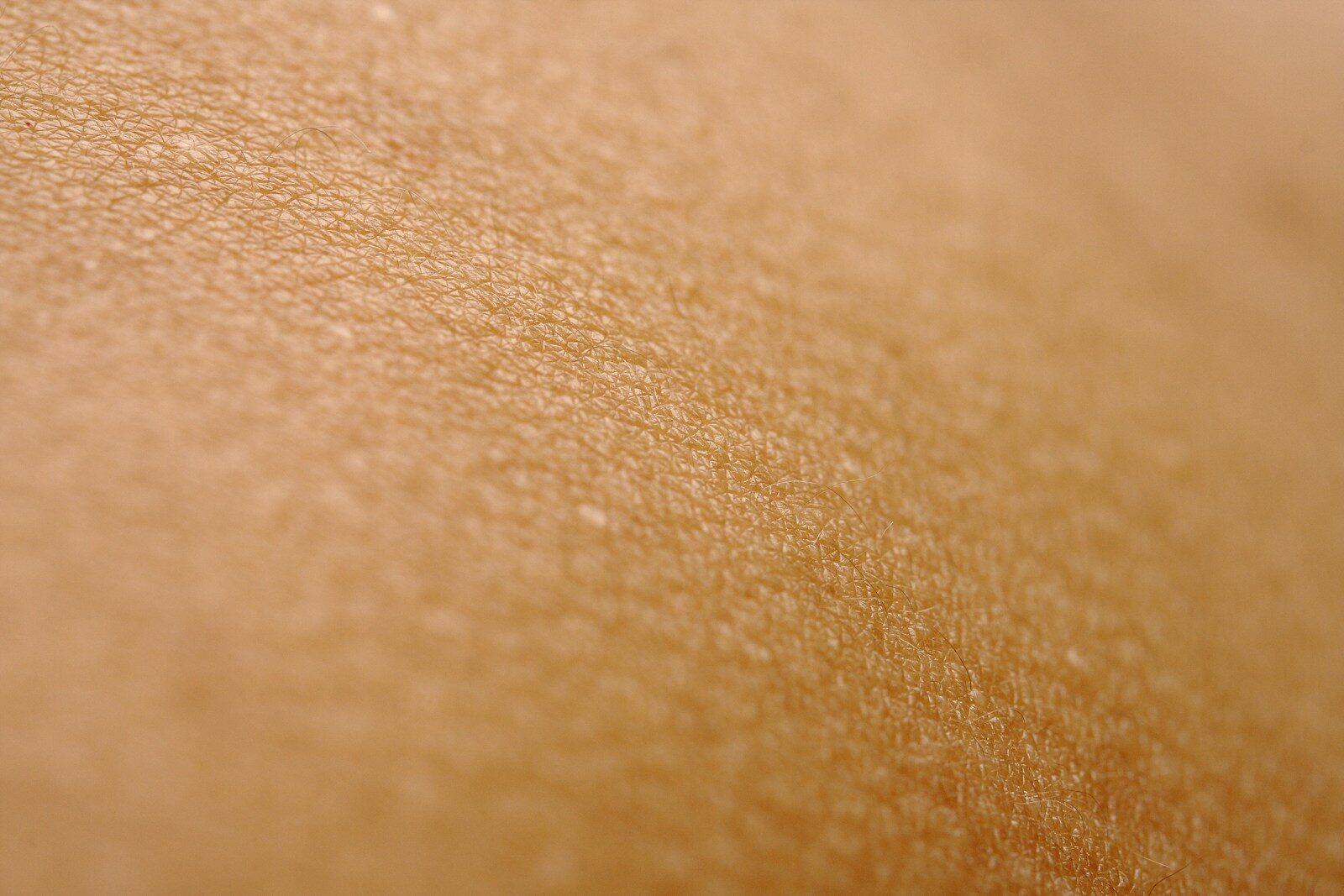
The barrier that matters here is the stratum corneum, the outermost layer of the epidermis, often described as bricks and mortar: corneocytes are the bricks, and the lipid matrix between them — ceramides, cholesterol, and free fatty acids — is the mortar. That mortar keeps water in and irritants out. On the hands, this architecture is put under unusual stress for three reasons.
First, exposure is constant and chemical. Surfactants in soap and detergent are designed to lift oil, and they do not distinguish between grease on a plate and lipids in the stratum corneum. Hot water accelerates the process, and alcohol-based sanitisers strip surface lipids, leaving skin drier if no replenishment follows.
Second, mechanical stress is relentless. Hands bend, grip, type, scrub, and carry. Healthy, well-hydrated skin flexes. Lipid-depleted skin does not flex as well; it micro-fissures, and those fissures are what we experience as roughness, snagging, and eventually painful splits at the fingertips and knuckles.
Third, recovery time is short. Facial skin gets hours overnight under a moisturiser. Hands get washed again within the hour. A barrier rebuilt only to be stripped again never reaches equilibrium. The result — dull, rough, lined hands with frayed cuticles — is a barrier budget in deficit: more lipid leaving than arriving, day after day.
What Washing Actually Removes
Washing removes three things that matter, and confusing them leads to products that feel good but do little. It removes surface sebum and applied product, which is expected and harmless in itself. It removes intercellular lipids from the stratum corneum, especially with repeated washing, prolonged water exposure, and strong detergents. And it removes natural moisturising factors — the water-binding molecules inside corneocytes, including amino acids, urea, and lactic acid derivatives — which help the stratum corneum hold water even when the air is dry.
That third loss explains a familiar paradox. Hands can feel dry immediately after washing, even after a gentle wash, because water itself is a drying agent when it evaporates from already-depleted skin. Wetting without replenishment is not hydration. Hydration, in barrier terms, means water held inside the stratum corneum by humectants and sealed there by lipids. A hand that is wet and then air-dried, with nothing applied, will often end up drier than it started. This is the same logic that explains why skin can feel dry immediately after moisturising when the product supplies water but no lasting lipid seal — a pattern explored in detail in the discussion of transepidermal water loss.
Frequency matters as much as harshness. One strong wash is recoverable. Twenty moderate washes, with no lipid replacement between them, compound.
The Pathway: From Lipid Loss to Visible Roughness
The pathway from washing to roughness is orderly, which is good news: an orderly pathway has identifiable intervention points. Lipid depletion thins the mortar between corneocytes. Gaps widen. Water escapes more readily through the stratum corneum — that is transepidermal water loss, rising not because the skin is “thirsty” in a poetic sense but because its seal is measurably leakier. As water leaves, corneocytes shrink and stiffen. Desquamation — the normal, invisible shedding of surface cells — becomes visible instead: flaking, ashiness, and a matte, papery texture on the backs of the hands.
At the same time, the acid mantle — the skin’s mildly acidic surface environment — is repeatedly disrupted by alkaline soaps and prolonged water exposure, leaving the barrier less able to repair and more prone to the appearance of redness, tightness, and sensitivity.
Around the nail, the pathway narrows to a seal problem. Repeated water exposure softens and swells the cuticle tissue, then drying shrinks it. The cycle loosens adhesion, creates small separations, and produces hangnails — small, painful tags of torn skin that tempt picking, which tears the seal further. A frayed cuticle is therefore both a cosmetic issue and a barrier issue: the protective seal around the nail matrix is compromised, and the nail edge reflects that disturbance as ridging, peeling, or a ragged margin. Persistent cracking, bleeding, swelling, or signs of infection are different matters and warrant clinician guidance; everyday barrier depletion is a formulation and routine problem, and it responds to formulation and routine answers.
Four Ingredients, Critically Evaluated
A concern post earns its keep by being selective. Many ingredients can claim a role in hand care. Four cover the barrier system without redundancy, and each must be judged on what it actually does — and what it cannot do.
Urea — Hydration and Gentle Keratolysis
Urea is one of the skin’s own natural moisturising factors. As a humectant, it draws and holds water in the stratum corneum, and it has a mild keratolytic character: it helps soften the bonds between surface corneocytes, which is why it is useful on thick, rough palmar skin and hardened cuticle edges. That dual action is its strength and its limit. Urea addresses water content and surface roughness, but it does not by itself rebuild the lipid mortar, so it needs lipid partners to hold its gains, and it can sting on fissured skin.
Ceramides and Barrier Lipids — Rebuilding the Mortar
If urea is about water, ceramides are about structure. Ceramides, cholesterol, and free fatty acids together form the lipid mortar, and replenishing them is the most direct way to reduce transepidermal water loss. The barrier-lipid alphabet — ceramide NP, AP, and EOP among them — describes lipids that differ in structure and position within the stratum corneum. For hands, the practical point is simpler: a product that supplies barrier lipids supports the seal in a way a purely humectant gel cannot, and the effect compounds with consistent use because the mortar is rebuilt gradually. The limitation is patience: lipid replenishment produces progressive improvement, not instant gloss.
Squalane — Lightweight Emolliency Without Grease
Squalane is a stable, skin-compatible emollient that fills gaps between corneocytes, smooths the surface, and reduces the friction that makes rough hands snag on fabric. Its advantage for hands is practical: it absorbs without the heavy, greasy residue that makes people avoid hand cream during the working day. A product nobody uses because it interferes with typing or cooking is a failed product, however good its chemistry. Its limit is that it is an emollient, not a complete barrier system: it does not replace the full ceramide-cholesterol-fatty-acid architecture or hold water on its own, so it is best used alongside humectants and barrier lipids.
Panthenol — Calm and Water-Binding Support
Panthenol, provitamin B5, converts in skin to pantothenic acid and contributes to water binding and to the appearance of calm, comfortable skin. For hands, it supports hydration gently and is associated with smoother, less irritated-looking skin after repeated washing and weather exposure. It is not a structural lipid or a keratolytic, so it will not by itself soften a thickened palm or rebuild a depleted mortar; its role is supportive, making a routine comfortable enough to sustain.
Together, the four map onto the pathway: urea holds water and softens roughness, ceramides rebuild the mortar, squalane restores smoothness and usability, and panthenol supports comfort and water binding. No single ingredient covers the system.
Why Cuticles Deserve Their Own Logic
Cuticles are often treated as an extension of hand skin. They are not. Hand skin is built for friction and exposure; the cuticle is built for sealing. Treating the two identically — scrubbing the nail edge, cutting the cuticle aggressively, or pushing it back with force — damages the seal that protects the nail matrix.
Healthy cuticle care has a different logic. Soften first, then protect. Warm water, a gentle cleanser, and a dedicated cuticle oil soften the tissue and make the nail edge look tidy without trauma. The oil’s job is to keep the cuticle pliable and adherent, reducing the dry, lifting edges that become hangnails. Pushing back should be gentle, infrequent, and only on softened tissue, if at all. Cutting should be avoided for the living cuticle seal; trimming should be limited to a loose hangnail tag, cleanly, rather than the seal itself.
Within Skin001’s formulation framework, this is the role of REcuticle Oil: a dedicated nail-edge oil designed to keep the cuticle pliable and to support the appearance of a tidy, healthy-looking nail margin, used as a separate step rather than assumed to be covered by hand cream, which is rarely massaged deliberately into the nail fold. The companion applied example is Nail Potion (Essence), positioned around the appearance of the nail plate itself — smoother-looking nails as the visible result of a protected nail unit, not as a treatment claim. The same logic that applies to an expensive barrier cream applies here: architecture matters more than a single hero ingredient.
Prosumer Application: A Hand and Cuticle Routine That Survives Washing
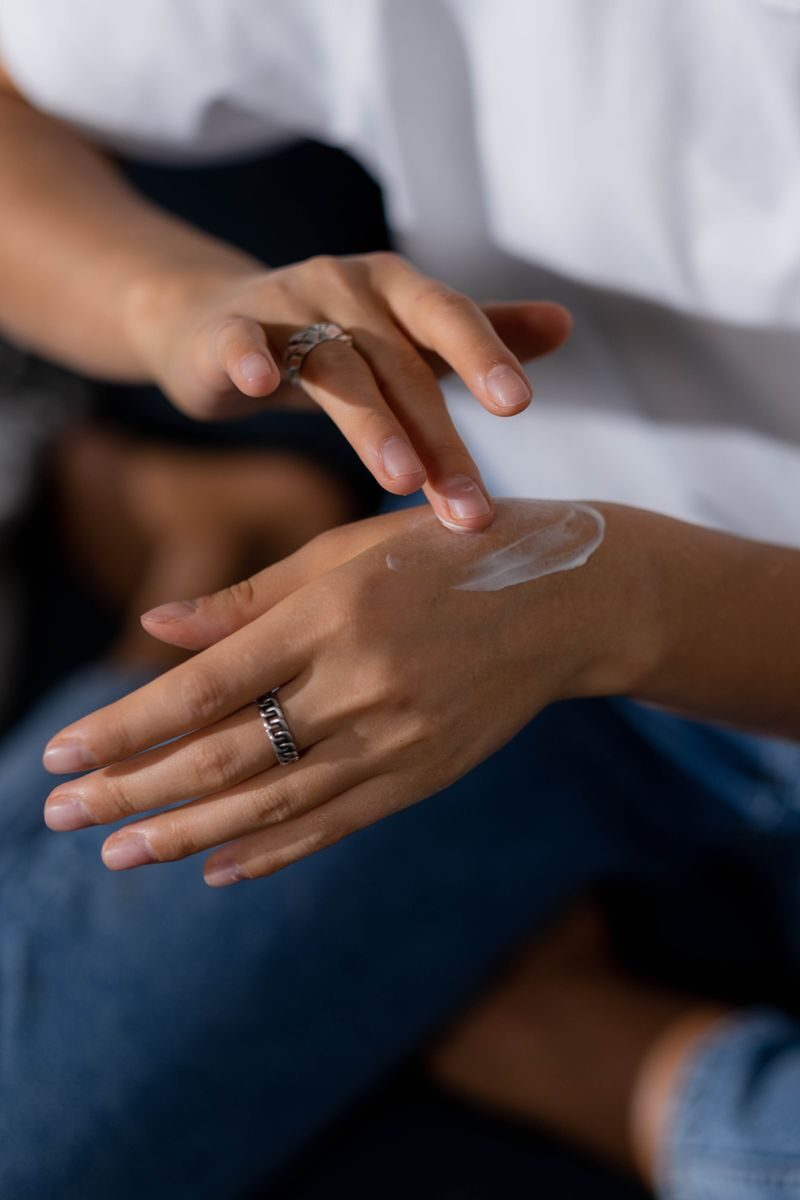
A routine that survives washing is built around timing, not quantity. More product once a day loses to less product at the right moments, repeated. After washing, while hands are still slightly damp, apply a hand product that combines a humectant with barrier lipids — urea or glycerin for water, ceramides and a light emollient such as squalane for the seal. Damp skin is not a flaw in this step; it is the water the humectant will hold. Reapply after the washes that matter most — after cleaning, gardening, cooking, or prolonged water exposure — rather than on a rigid schedule. The barrier budget is spent by washing, so replenishment should follow washing.
At night, the routine can be richer, because there is no next wash for hours. A thicker lipid layer, worn under cotton gloves if that is comfortable, gives the stratum corneum an uninterrupted window to rebuild. This is the appropriate place for a heavier layer: it is not needed all day, but overnight it reduces water loss while the barrier does its repair work.
Cuticle care is a separate step, done deliberately, ideally at night when it will not be washed away within minutes. Massage a small amount of cuticle oil — within Skin001’s framework, REcuticle Oil — into each nail fold, paying attention to the proximal edge where hangnails form. Keep nails at a practical length, file rather than tear, and keep the oil where it will actually be used. Avoid very hot water when lukewarm will do, wear gloves for cleaning and gardening, and be cautious with strongly scented products if skin is already reactive.
FAQ
Why do my hands feel drier after washing than before?
Because washing removes barrier lipids and natural moisturising factors, and evaporating water leaves the stratum corneum drier than it started. Apply a humectant-plus-lipid product while hands are still slightly damp to hold that water in place.
Should I cut my cuticles to make nails look tidy?
No. The cuticle is a protective seal for the nail matrix. Cutting it damages that seal and invites ragged regrowth and irritation. Soften with warm water and oil, tidy gently, and trim only a loose hangnail tag cleanly.
Is hand cream enough, or do I need a separate cuticle oil?
Hand cream covers broad skin surfaces and is washed off quickly. A cuticle oil is massaged deliberately into the nail fold, where hand cream rarely reaches in sufficient amount. For tidy-looking nail margins, the separate step earns its place.
Why do my palms split while the backs of my hands just look lined?
Palmar skin is thick and built for friction, so when it loses lipids it stiffens and splits rather than creasing. Dorsal skin is thinner with less fat beneath, so it shows creasing and dullness first. Both are barrier depletion; they simply fail in the way their architecture dictates.
Can a hand routine really keep up with frequent washing?
It can reduce the deficit, not eliminate washing’s effect entirely. The goal is replenishment after the washes that matter, a richer overnight layer, and protection with gloves for wet work — a budget managed daily, not a one-time repair.
The CTA
Hands and cuticles tell the truth about a routine. They show whether barrier science is being applied or merely admired. The pathway is clear: washing depletes lipids and water-binding factors, the lipid mortar thins, water escapes, and roughness, splitting, and frayed cuticles follow. The answer is equally clear: replace water and lipids together, protect the cuticle seal as its own tissue, and time replenishment to follow washing rather than fighting it.
For readers building that routine with Skin001’s compound approach, the next step is to explore Skin001’s pure compound ingredients and bases, and to treat hand and cuticle care not as an afterthought to facial skincare but as barrier science applied where the barrier is tested hardest — every wash, every day.