The Clinical Hook
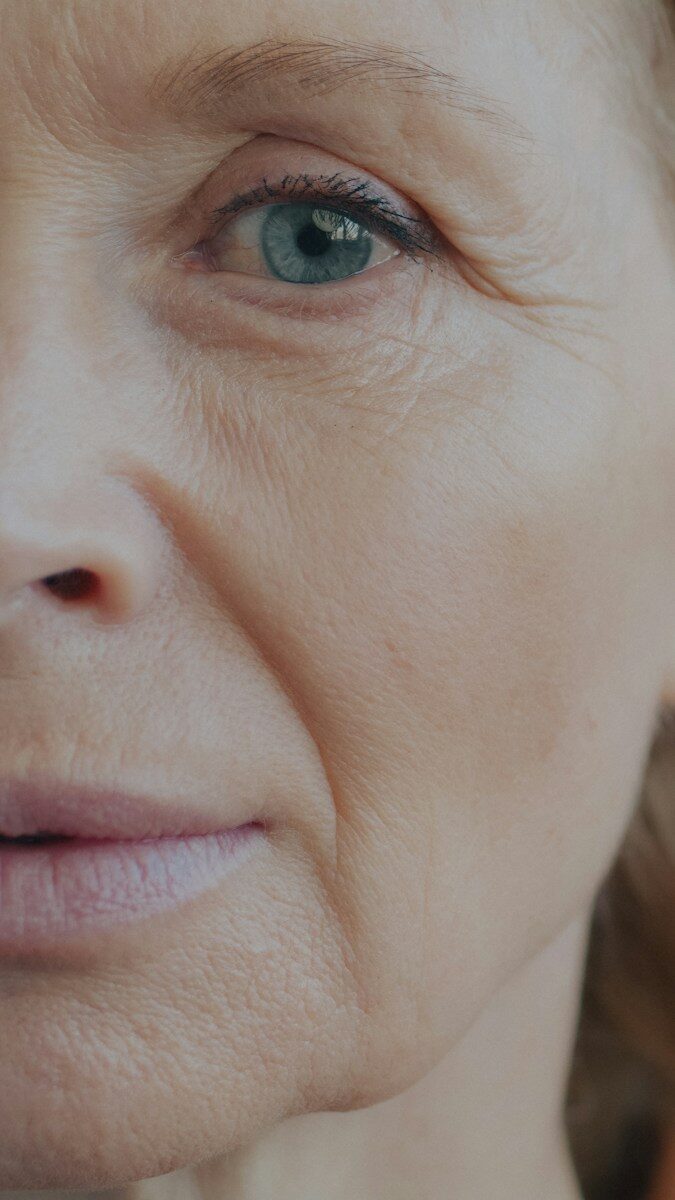
Skin that used to spring back now takes a moment longer to settle, and the change is easy to miss until a photograph makes it obvious. The jawline looks softer, the cheeks sit a fraction lower, and a pinch of skin on the back of the hand flattens more slowly than it once did. These are the visible signs of skin elasticity loss — a slow, layered process in the dermis. This article maps the four skin elasticity loss causes and evaluates the ingredients that support firmer-looking skin.
Clinical TL;DR
- Skin elasticity is the dermis springing back after deformation. It depends on collagen for tensile strength and elastin for recoil.
- The four skin elasticity loss causes are intrinsic aging, ultraviolet damage to elastin, glycation of collagen, and barrier depletion that leaves the dermis under-supported.
- No cosmetic ingredient rebuilds lost elastin, but retinoids, signal peptides, vitamin C derivatives and niacinamide each support firmer-looking skin through a different mechanism.
- Elasticity care is barrier-first: a depleted barrier cannot tolerate the actives that support collagen appearance, so protection and tolerance come before intensity.
What Skin Elasticity Actually Is: Collagen, Elastin and the Ground Substance
Elasticity is a mechanical property, and it helps to think of the dermis as a woven structure rather than a single material. Collagen is the most abundant component: thick, rope-like fibres, mostly type I with some type III, arranged in a mesh that resists pulling and gives skin its tensile strength. Elastin is the second fibre system: thinner, branching fibres with a core of the protein elastin wrapped in microfibrils, which stretch under load and recoil when the load is released. The third component is the ground substance — a gel of glycosaminoglycans, including hyaluronic acid, that holds water and keeps the fibre mesh hydrated and spaced.
The two fibre systems do different jobs, and the distinction matters because they age differently. Collagen is the scaffold: it holds skin’s shape against gravity and repeated expression. Elastin is the spring: it lets skin deform — a smile, a raised eyebrow, a night spent on one cheek — and then return to its resting shape. When collagen thins, skin looks less supported; when elastin is damaged, skin holds the deformation instead of returning to shape.
Elastin: The Fibre That Is Almost Never Replaced
Elastin deserves its own paragraph because its biology sets the ceiling on what skincare can do. The body’s elastin is laid down mostly during development and early life, and adult skin makes very little new elastin after that — the fibres in a forty-year-old face are largely the ones built decades earlier. When elastin fibres are damaged, they fray, fragment and clump rather than being rebuilt, and the skin’s recoil weakens. This is the central, honest fact of elasticity care: cosmetic ingredients can support firmer-looking skin and protect the fibres that remain, but no cream has been shown to manufacture new elastin in adult skin.
The Four Skin Elasticity Loss Causes
Elasticity loss is four processes running at different speeds, and they compound each other.
Cause One: Intrinsic Aging and the Slowing of Collagen Renewal
Collagen is continuously remodelled: fibroblasts synthesise new collagen while enzymes called matrix metalloproteinases break old collagen down. In young skin the two sides roughly match; with age, fibroblasts slow while breakdown continues. The net result is a gradual thinning of the collagen mesh: fewer, thinner, less densely packed fibres. The visible result is skin that looks less supported, with fine lines settling into place rather than smoothing away. This is intrinsic aging: no ingredient can switch it off.
Cause Two: Ultraviolet Damage and Solar Elastosis
Ultraviolet light is the most consequential external cause of elasticity loss, and it attacks elastin specifically. Chronic UV exposure drives the same matrix metalloproteinases that break collagen down, and damages elastin fibres directly. The result has a clinical name — solar elastosis: thickened, yellowed, deeply lined skin where the sun has hit hardest, with elastin fibres tangled and clumped rather than orderly and springy. The damage is cumulative, which is why elasticity loss appears first on the face, neck, chest and backs of the hands. Every other ingredient in this article works on skin already damaged, while UV protection limits the damage itself.
Cause Three: Glycation — Sugar Stiffening the Scaffold
Glycation is the slow, non-enzymatic bonding of sugar molecules to proteins, and collagen is one of its main targets. When sugars bind to collagen fibres, they form cross-links known as advanced glycation end products. These cross-links make collagen fibres stiffer and less flexible, and they make the fibres resistant to the normal breakdown-and-replacement cycle — so glycated, stiffened collagen accumulates instead of being replaced by fresh, supple fibres. The visible result is skin that looks less supple and more rigid. Glycation is driven by chronically elevated blood sugar and by sugars formed during high-heat cooking, and no topical ingredient has been shown to remove glycation cross-links from collagen.
Cause Four: Barrier Depletion and the Under-Supported Dermis
The fourth cause is the one most often missed, because it sits in the epidermis rather than the dermis. The stratum corneum — the skin’s outermost barrier — controls how much water the skin holds, and a depleted barrier lets water escape faster than it can be replaced. When the epidermis is chronically dehydrated, the dermis beneath it is under-supported: the ground substance holds less water and the fibre mesh is less well spaced. The result is not the same as collagen loss, but it looks similar — skin that appears less plump, less resilient and more lined — and it is the one cause fully reversible in weeks rather than years. A barrier restored with ceramides, cholesterol and humectants holds water again, and the skin’s spring improves in appearance.
How Elasticity Loss Shows Up on the Face and Body
The signs of elasticity loss follow the mechanics. On the face, the earliest visible change is usually the nasolabial fold deepening and the jawline softening, because those are the areas where gravity and repeated expression pull hardest on a thinning scaffold. The under-eye area shows it early too, because the skin there is thin and the elastin reserve is small. On the neck and chest, thinner skin with fewer oil glands creases sooner; on the body, the backs of the hands and inner arms show it first, both thin-skinned and heavily sun-exposed.
A simple way to observe elasticity is the pinch test, done gently on the back of the hand: pinch a fold of skin, release it, and watch how quickly it flattens. In young skin the fold disappears almost immediately; in skin with reduced elasticity it lingers a second or two longer. The test is not a diagnosis, but it shows that elasticity is about behaviour over time — and only one of those two causes is quickly reversible.
Four Ingredients Evaluated for Elasticity Appearance
Elasticity has four ingredients worth examining, each working through a different mechanism.
Retinoids: The Collagen-Appearance Standard
Retinoids — retinol, retinal and their gentler relatives — are the most studied family in elasticity care, and the mechanism is well mapped: retinoids increase fibroblast activity, support the appearance of new collagen, and reduce the activity of the enzymes that break collagen down. Used consistently over months, a retinoid supports denser, firmer-looking skin, with fine lines appearing softened. The limit is tolerance: retinoids are the most irritating of the four ingredients here, and irritation that damages the barrier undermines the very elasticity the retinoid is meant to support. The correct way to use them is the barrier-first protocol — low concentration, gradual introduction, one new active at a time, and a pause at the first sign of persistent redness or flaking. The choice between retinol, retinal, HPR and bakuchiol is mapped in the retinoid tolerance guide.
Signal Peptides: Instructions for the Fibroblast
Signal peptides are short chains of amino acids that act as messengers: they signal fibroblasts to behave as though repair is needed, which supports the appearance of new collagen. The best-known families — palmitoyl pentapeptide and palmitoyl tripeptide — have been studied for their effect on the appearance of fine lines and firmness. Their advantage is tolerance: peptides are generally well accepted even by reactive skin, and they can be used alongside retinoids without adding irritation. Their limit is subtlety: the effect is gradual and modest, and it depends on the peptide reaching the dermis in a stable formulation — a label listing a peptide at the end of a long ingredient list is not a formula built around it. The three peptide families are explained in the guide to signal, carrier and neurotransmitter peptides.
Vitamin C Derivatives: The Collagen Cofactor
Vitamin C is a required cofactor for collagen synthesis: without it, the enzymes that build collagen cannot complete their work. That makes it a genuine, mechanistically grounded ingredient for elasticity appearance — not because it adds collagen directly, but because it supports the machinery that makes it. The practical problem is stability. Pure L-ascorbic acid oxidises quickly in water and in air, so the derivatives — SAP, MAP, VC-IP and 3-O-ethyl ascorbic acid — were developed to survive in a formula and convert to active vitamin C on the skin. Each derivative balances stability, penetration and conversion differently. Its limit is that it is a supporting ingredient, not a primary one — it helps the collagen machinery work, but it does not drive fibroblast activity the way a retinoid does.
Niacinamide: The Barrier’s Contribution to Firmness
Niacinamide, vitamin B3, does not act on collagen directly. Its contribution runs through the barrier: it supports ceramide synthesis in the stratum corneum, helps the barrier hold water, and supports a calmer, more even-toned appearance. The relevance to elasticity is the fourth cause described above — a barrier that holds water supports a dermis that behaves more resiliently, and a barrier that is intact tolerates the retinoids and peptides that do the deeper work. Niacinamide is also one of the best-tolerated actives in skincare, which makes it the ingredient that holds an elasticity routine together while stronger actives are introduced gradually. Its limit is that it is a foundation, not a driver: used alone, it will not match the firmness appearance of a retinoid or a signal peptide.
The Barrier That Holds Them
The pattern across all four ingredients is the same: elasticity care is a system, not a single hero ingredient, and the barrier is the part of the system that decides whether the rest of it works. A depleted barrier cannot tolerate retinoids, cannot hold the water that makes the ground substance resilient, and cannot show the benefit of peptides that need months of use. So the order of operations matters more than any one product: restore the barrier first, introduce one active at a time starting with the best-tolerated, add intensity only when tolerance is proven, and protect the result every day.
For skin that has been through procedures or over-exfoliation, the same logic applies with even more care: a raw barrier needs recovery before stimulation, as the guide to PDRN and polynucleotides explains — recovery and stimulation are sequential, not simultaneous.
Prosumer Application: An Elasticity Routine That Respects the Barrier
A workable elasticity routine is built in layers, in this order, changing one variable at a time.
Morning: a gentle cleanse, a humectant layer, a vitamin C derivative for collagen cofactor support, a moisturiser with ceramides and cholesterol, and sunscreen as the non-negotiable final step — the single most effective elasticity protection available.
Evening: a gentle cleanse, a barrier-supporting moisturiser, and a retinoid introduced two or three nights a week at first, increasing only when the skin shows no redness or flaking. On non-retinoid nights, a signal-peptide product can sit underneath the moisturiser, and niacinamide fits either routine as the ingredient that keeps the barrier steady.
Within Skin001’s formulation framework, this is the role of InfantSKIN™: a barrier-first anti-aging compound for sensitive skin, used as the example of the principle that elasticity support begins with a barrier that can hold moisture and tolerate actives. It is not a substitute for sunscreen or for a retinoid; it is the foundation that makes the rest of the routine tolerable, most useful for skin that finds standard anti-aging actives too aggressive. The practical rule is consistency over intensity: a gentle routine used every day for six months does more for the appearance of firmness than an aggressive routine abandoned after three weeks of irritation.
Two safety limits apply throughout: introduce one new active at a time and wait at least two weeks before adding the next, so any irritation can be traced to its cause; and stop and simplify if the skin shows persistent redness, stinging or flaking — the barrier is signalling that it needs recovery, not more stimulation.
FAQ
Can skincare restore lost skin elasticity?
Not fully. Cosmetic ingredients can support firmer-looking skin and protect the fibres that remain, but adult skin makes very little new elastin, and damaged elastin is not rebuilt by a cream. What skincare can do is support collagen appearance, restore barrier hydration and prevent further UV damage.
What is the main cause of skin elasticity loss?
There is no single main cause. Intrinsic aging slows collagen renewal, ultraviolet light damages elastin, glycation stiffens collagen, and barrier depletion leaves the dermis under-supported. UV damage is the largest preventable contributor.
Do peptides really help with skin firmness?
Signal peptides support firmer-looking skin by signalling fibroblasts to behave as though repair is needed, which supports collagen appearance. The effect is gradual and modest, and it depends on the peptide being present in a stable, well-formulated product. Peptides are a gentle, well-tolerated partner to retinoids rather than a replacement.
How long does it take to see firmer-looking skin?
Barrier hydration improves the appearance of resilience within weeks. Collagen-appearance support from retinoids and peptides takes longer — typically three to six months of consistent use.
Is loss of elasticity the same as wrinkles?
No. Wrinkles are lines in the surface; elasticity loss is a change in how the skin behaves — how it deforms and how quickly it returns. They are related — a dermis that has lost its spring also loses the support that keeps the surface smooth — but they are different measurements, and an ingredient can improve one without addressing the other.
The CTA
Loss of elasticity is not a single failure but a slow, layered process — collagen renewing more slowly, elastin damaged by years of sun, fibres stiffened by glycation, and a barrier that quietly stops holding water. Understanding the four skin elasticity loss causes changes the routine: protection first, barrier second, and actives introduced gradually, in an order the skin can tolerate. That is the clinical approach to firmer-looking skin: not a single hero ingredient, but a system that respects the biology it is working with. To build that system from pure compound ingredients and bases made for a barrier-first routine, explore Skin001’s pure compound ingredients.